There is a certain moment in every deep-dive case when the internet runs out of road. The articles start quoting each other. The timelines get fuzzy. The “sources” turn into screenshots of screenshots. And if you are a true crime podcaster who actually wants to know what happened, not just repeat what got the most clicks, you end up in the unglamorous place where real stories live.
It is paperwork. It is patience. It is learning how to ask the right public agency the right question in the right format so your request is hard to misroute or misinterpret.
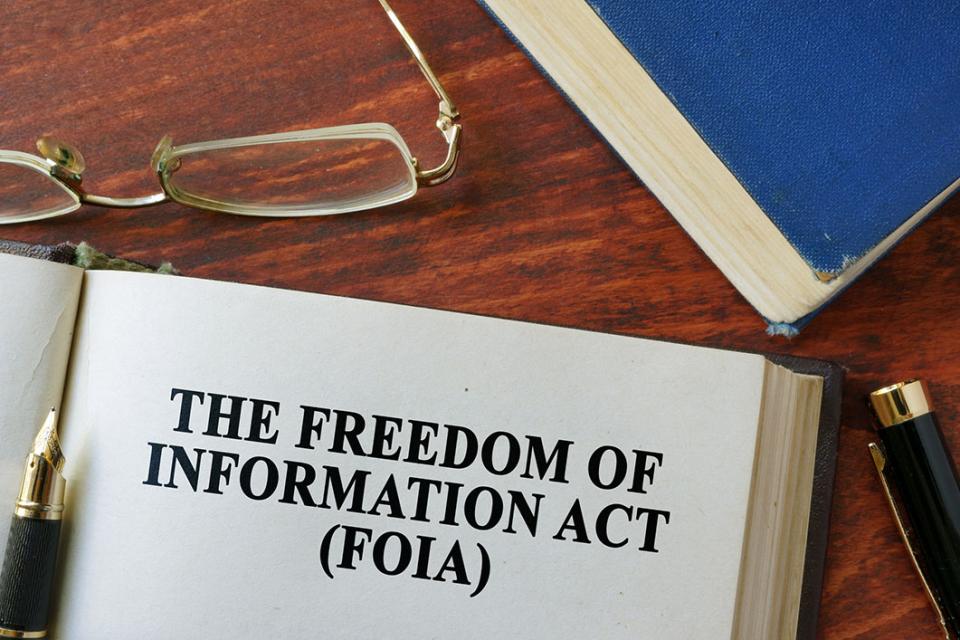
FOIA requests and court records are not magic keys that unlock “classified documents” in a spy-movie sense. They are legal tools built on a simple idea: in a democracy, the public has a right to inspect many government records. In practice, it is more like trying to open a stuck drawer without breaking the dresser. You can get incredible material, but you will also get redactions, denials, delays, and invoices that make you question every life choice you have ever made.
FOIA vs public records: different rulebook
Let’s clear up the language first, because creators throw around “FOIA” the way people say “Kleenex.”
- FOIA is the federal Freedom of Information Act. It applies to executive branch federal agencies like the FBI, DEA, ATF, and the Department of Justice.
- FOIA does not apply to Congress, the federal courts, state or local agencies, or private companies. (A contractor’s records can sometimes be reachable if the records are held by a federal agency.)
- State public records laws apply to state and local agencies like city police departments, county prosecutors, medical examiners, and state labs. These laws have different names depending on where you live, and the exemptions can vary wildly.
The practical difference for podcasters is this: the most consequential parts of a case are often local, but the records can be scattered across city, county, state, and federal layers. Top creators are not just good storytellers. They are good at mapping the bureaucracy.
Before you file
Before you spend weeks waiting on a request, do a quick triage. It saves time, money, and frustration.
- Check what is already public: court portals, clerk websites, in-person kiosk access, posted press releases, and prior disclosures in related cases.
- Confirm the right custodian: the police department may have the incident report, while the sheriff has jail calls, and the prosecutor has court exhibits. “No records” is often a routing problem, not a conspiracy.
- Get the identifiers first: incident number, case number, citation number, booking number, and the date and location. Sometimes you can get these with a basic front-desk request before you ever file a formal one.
- Expect a portal: some agencies require a specific form or online system. Using their process reduces the odds of a stall.
What podcasters request
When people imagine “hidden evidence,” they tend to picture a single smoking-gun document. In reality, the best revelations usually come from patterns across multiple records. Here are the workhorse documents that routinely change a narrative.
Police reports
These can include incident reports, supplemental narratives, witness lists, and property logs. Sometimes you get the full narrative. Sometimes you get a skeleton with names blacked out. Even then, dates, responding officers, and sequences can confirm or contradict the public storyline.
911 calls and CAD logs
Dispatch logs are often more available than audio. Audio is powerful and also ethically loaded, especially when someone is in crisis. A CAD log is not a transcript, but it can still show key timestamps, response times, and the initial reported nature of the call, which matters when a timeline is disputed.
Bodycam and dashcam
These requests are where many creators hit the strongest resistance, especially if a case is open, involves minors, contains medical details, or could reveal investigative tactics. In some states the rules are clearer and access is better. In others, it is a wall. When you do get footage, it is often redacted, blurred, muted, or time-clipped.
Autopsy and medical examiner records
Availability depends heavily on jurisdiction. Some places treat autopsy reports as public records, others restrict them to family or parties with a demonstrated interest. Coroner systems and medical examiner systems can also operate differently. Many offices will release a cause and manner of death but withhold photos and certain narrative details, especially where postmortem privacy statutes apply.
Forensic lab records
Think toxicology, DNA testing summaries, evidence submission forms, and chain-of-custody documentation. Even without raw data, these records can reveal what was tested, when it was tested, and what was not tested, which is often just as telling.
Jail calls and booking records
In many counties, these are obtainable with redactions. They can be invaluable for establishing a suspect’s routine, contacts, and statements, but they also carry a high risk of turning a person’s worst day into content. Use sparingly, contextualize aggressively.
Prosecutor and defense filings
Once a case is in court, filings are where the real arguments live: motions to suppress, discovery disputes, expert challenges, plea agreements, and sentencing memos. This is also where you will see what evidence exists, even if you cannot get the underlying exhibits.
Court records: the receipts
If FOIA is the slow cooker, court records are the stovetop. When a case is litigated, documents accumulate quickly, and many are public in principle. In practice, access can still vary by state, court level, case type, sealing, and whether you need an in-person terminal or paid system to pull the file.
Start with the docket
The docket is the case’s table of contents. It tells you what was filed and when. Even when you cannot access a sealed attachment, the docket entry often reveals enough to guide your next request.
- State trial courts often have online portals, but the quality ranges from excellent to “it only works on Tuesdays.”
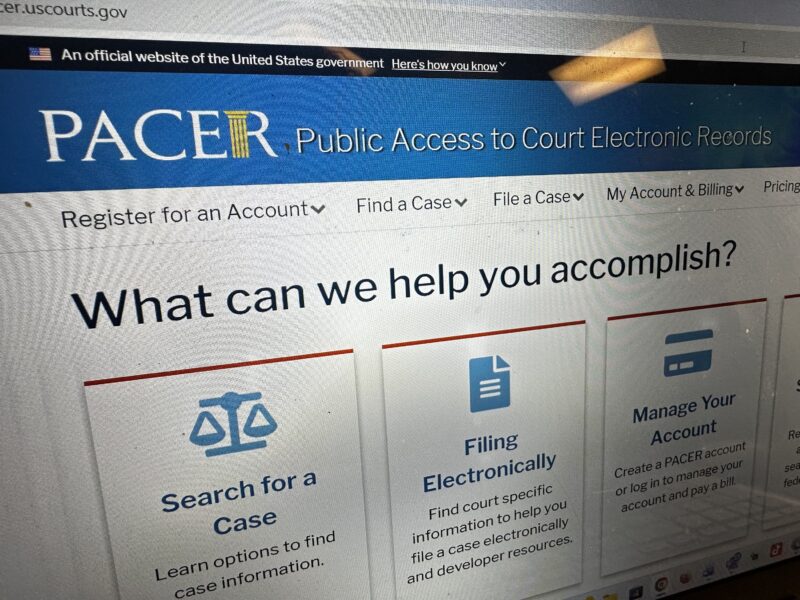
- Federal courts use PACER. It charges per page with caps for many documents, and there is typically a quarterly waiver threshold for small totals. A lot of federal material also becomes free to read through tools like CourtListener and the RECAP archive once someone has mirrored it.
Transcripts
Trial transcripts are where you catch the details that never make it into headlines: the exact wording of a question, the objection that got sustained, the side-bar conference that changed the shape of testimony. They can also correct the myth that a viral clip created.
Transcripts are often sold by court reporters, and the cost can be steep. Some hearings have recordings you can request instead, depending on the court.
Exhibits and discovery
Exhibits are the photos, videos, documents, and physical evidence introduced in court. In high-profile cases, creators chase exhibits because they feel like “proof.” But the rules are thorny. Many exhibits are never published online. Some are available only by in-person viewing. Others are sealed to protect privacy, safety, or ongoing investigations.
Write requests that work
I wish there were a single perfect template. There is not. But there are habits that separate a request that gets traction from one that dies in a generic denial email.
1) Name the record
Do not request “everything related to the case.” Ask for specific categories: incident report, supplemental reports, CAD log, body-worn camera, evidence inventory, lab submission form. Agencies respond better when you speak their filing-cabinet language.
2) Narrow the window
Give them something they can search. “From May 10 to May 14, 2021” beats “around spring of 2021.” If you know the call time, include it. If you know badge numbers or report numbers, include them.
3) Ask for usable formats
- PDF for documents
- CSV for logs and spreadsheets
- Native digital files for audio and video if available
Also: ask them to preserve metadata when possible. Metadata can matter for verifying dates and authenticity.
4) Reduce burden
If your jurisdiction allows it, consider phrasing requests as “records sufficient to show” key facts. Example: “Records sufficient to show CAD entries and timestamps for calls for service to [address] between [time range] on [date].” This can cut down on search time and redaction fights without watering down what you need.
5) Fees and waivers
Fees are where good intentions go to die. Ask for an estimate before they proceed. If you are producing journalism, you can request a fee waiver or reduction based on public interest. Results vary, but asking is part of the process.
6) Polite, documented, consistent
Keep a spreadsheet of request dates, responses, fee quotes, and deadlines to appeal. Being organized is not just a productivity flex. It is leverage.
One simple example (adjust for your jurisdiction): “Pursuant to applicable public records law, I request a copy of the computer-aided dispatch (CAD) log and incident report for calls for service at or near [address/area] on [date], between [start time] and [end time], including event numbers and responding unit identifiers. Please provide records electronically in PDF (reports) and CSV (logs). If fees will exceed $50, please provide an itemized estimate before processing.”

Denials and redactions
Creators sometimes treat denials as proof of a cover-up. Sometimes it is. Often it is not. Here are the most common reasons agencies say no.
- Open investigation exemptions: releasing details could compromise leads or strategy.
- Privacy protections: victims, minors, medical details, addresses, and identifying info.
- Confidential informants or protected witnesses.
- Law enforcement tactics: surveillance methods, undercover procedures, security vulnerabilities.
- Sealed or expunged records: certain arrests or juvenile records may be legally hidden.
- “No records” responses: sometimes true, sometimes a sign you asked the wrong agency or used the wrong terminology.
And then there is the most frustrating category: the record exists, but it is going to cost you hundreds or thousands to redact it. That is not always malice. Redaction takes human time, and agencies bill for it.
Appeals and the long game
When seasoned podcasters talk about “getting documents,” what they often mean is “getting documents after the third try.”
Appeal
Most public records systems include an appeal path. Use it. Point to the statute. Ask the agency to cite the exact exemption relied upon. Request segregable portions, meaning the parts they can release even if other parts are exempt.
Change the angle
If the police department denies bodycam, try the prosecutor’s office for exhibits attached to filings. If audio is denied, request the call log. If the case file is sealed, look for civil litigation, administrative complaints, or oversight reports that touch the same facts.
Time it
Records that are exempt during an active investigation may become releasable after an arrest, after sentencing, or after a case closes. Timing is a strategy, not an afterthought.
Ethics
This is the part I wish every creator would pin above their editing timeline.
Public records are not automatically “public interest.” A victim’s final moments might be obtainable and still be exploitative to play. A witness’s address might be in a document and still be dangerous to repeat. A suspect’s medical information might be technically releasable and still be irrelevant to the story you are telling.
Our north star is simple: minimize harm while maximizing truth. That means:
- Using graphic audio sparingly, if at all, and only with clear editorial purpose.
- Redacting private details in our own notes even if the agency forgot to.
- Prioritizing context over shock value, especially with sensitive exhibits.
- Remembering that the people in these files are not characters. They are families who have to live after the episode drops.
Legal and platform basics
Public availability helps, but it is not a blanket shield. Beyond defamation and privacy, keep these risks on your radar:
- Gag orders and sealed materials: publishing or encouraging access to sealed content can trigger contempt issues.
- Doxxing and harassment: even accurate details can put witnesses or family members at risk if your audience is motivated and messy.
- Platform rules: hosts and distributors often have policies about graphic content, harassment, and personal data.
For ongoing or high-risk cases, a media attorney is not overkill. It is basic hygiene.
Records add clarity
True crime culture loves closure. Public records are better at something else: clarity. They help you separate:
- What was alleged vs what was proven
- What police believed early vs what evidence supported later
- What the public assumed vs what the timeline shows
And sometimes, yes, they surface new leads. Not because a podcaster found a secret memo titled “THE TRUTH,” but because the paperwork reveals a gap: an interview that never happened, a test that was never ordered, a tip that was logged and ignored.
That is where the genre can do its best work. Not as internet jury, but as a persistent flashlight.
FAQ
Can podcasters get classified documents with FOIA?
Generally, no. Classified national security information is exempt from release. But FOIA can sometimes produce declassified materials, or partially released records with redactions, after review. What creators often mean is “non-public” or “hard-to-obtain” records, like investigative files, recordings, or exhibits that require specific requests and may be partially redacted.
How long does FOIA take?
It can be weeks, months, or longer, depending on the agency backlog, the scope of your request, and whether the records require review and redaction. Narrow requests usually move faster.
Do you have to identify yourself as a journalist?
Not always, and rules differ. But being transparent about your purpose can help when requesting fee waivers or negotiating scope. What matters most is writing a request that is specific and legally grounded.
What is the difference between a docket and a transcript?
A docket is the list of everything filed in a case. A transcript is the word-for-word record of what was said in court. The docket tells you what to chase. The transcript tells you what actually happened in the room.
Is it legal to publish public records on a podcast?
Sometimes, but it depends. Defamation risk, privacy concerns, court orders, state laws, and platform policies still apply. When in doubt, consult a media attorney, especially for ongoing cases.
The takeaway
FOIA requests and court records are not shortcuts. They are accountability tools, and in the best hands, they are also empathy tools. They force a story to move at the pace of reality, not the pace of virality.
If you love true crime because you love the puzzle, paperwork will humble you. If you love it because you care about what happened to real people, paperwork will change how you listen to everything else.