There is a version of true crime production that looks like a pinboard and a sudden “big reveal.” Then there is the real version: spreadsheets, public records portals that time out, late-night transcript reading, and an ongoing conversation in the team Slack that basically boils down to: Are we being fair to the people who have to live with this?
The best hosts do not just chase a twist. They build a season the way a careful newsroom builds an investigation, with documentary habits, legal literacy, and a victim-centered ethic that stays intact even when the story is messy and the audience is hungry.
Start with standards
If you have ever wondered why some shows feel grounded while others feel like a rumor with theme music, it usually comes down to the same thing: standards.
Professional hosts often borrow from core journalistic principles:
- Verification over virality: A claim is not “good audio” until you have done the work to corroborate it, or you can responsibly frame it as unverified.
- Transparency: If a detail is uncertain, they say so, or they leave it out.
- Minimizing harm: They think about impact on victims, witnesses, and wrongly accused people.
- Independence: They disclose conflicts and avoid becoming a mouthpiece for any side.
That last one matters more than people realize. When a host gets too close to a source, the story can tilt without anyone noticing until the damage is done.
Build the paper spine
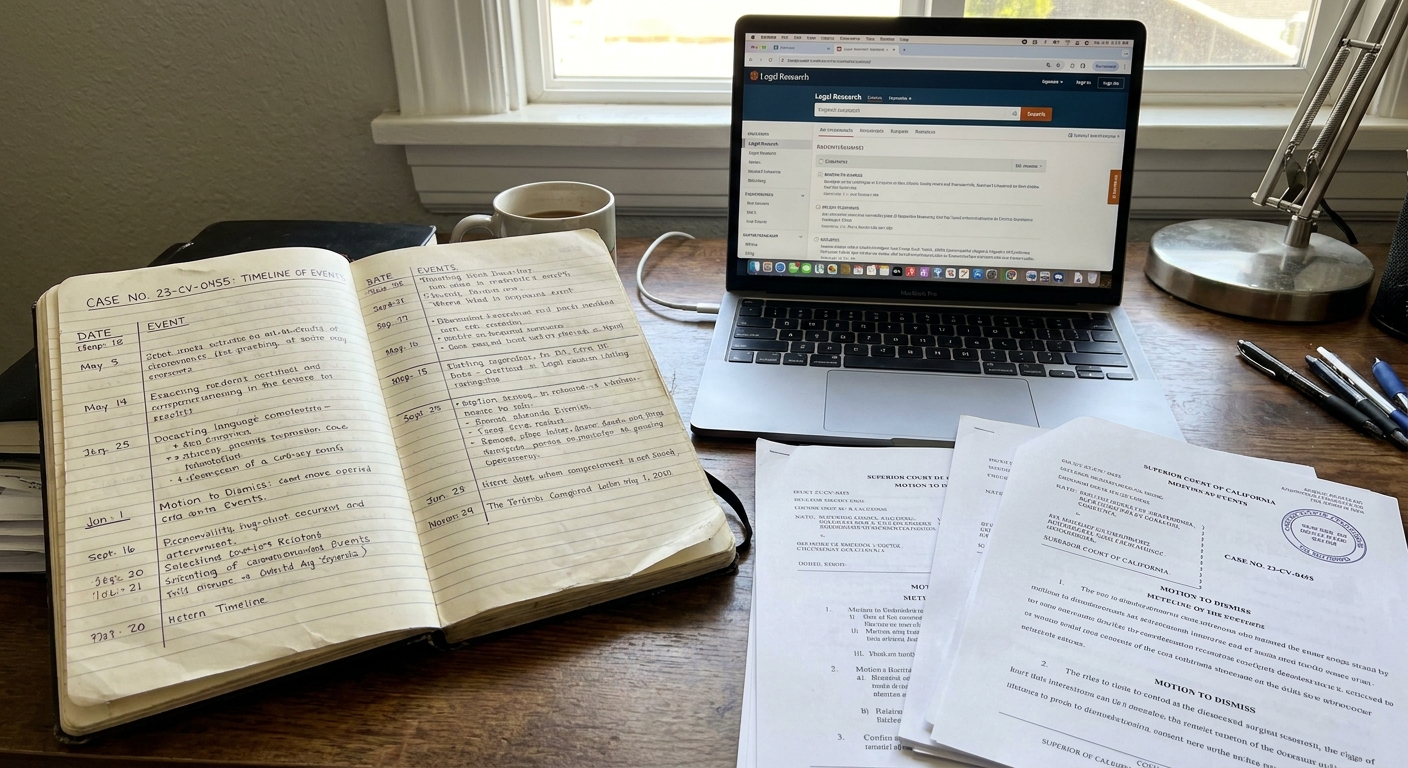
Before interviews and field tape, most responsible podcast investigations build what I call a paper spine: the timeline and factual backbone made from records that exist whether anyone talks to you or not.
Core documents teams pull early
- Court filings: complaints, indictments, motions, trial exhibits lists, sentencing memos.
- Transcripts: hearings, trial days, and depositions when they are accessible as part of the public record. In many places, public access varies widely.
- Law enforcement reports: incident reports, supplemental narratives, call logs when released.
- Medical examiner or coroner documentation: where legally obtainable, handled with extra care.
- Probation and corrections records: conditions, violations, release dates, and supervision details.
The goal is not to turn a season into a document read-aloud. It is to ensure every narrative choice is anchored to something checkable.
In practice, a paper spine is where the story starts disagreeing with itself. A witness says the phone call happened “after midnight.” The call log says 11:43 p.m. A family member remembers a date. The court calendar shows the hearing was continued. Those small contradictions are not just trivia. They change what you can responsibly imply, and what you need to keep digging for.

FOIA and records requests
FOIA is not a magic wand. It is paperwork, patience, and learning how each agency defines “reasonable.” In the United States, “FOIA” often gets used as shorthand, but many requests are filed under state public records laws, not the federal Freedom of Information Act. Federal FOIA applies to federal agencies only. State and local records are governed by state statutes, and sometimes additional local rules and policies.
If you are outside the U.S., the same muscle still applies. Many countries have FOI laws or FOIA-style access regimes with different timelines, exemptions, and appeal paths.
What top podcasters request
- 911 calls and CAD logs: usually with redactions, and sometimes denied depending on the case.
- Body-worn camera policies and footage: policies are often easier to obtain than video.
- Dispatch audio: can clarify timing and response, but is frequently restricted.
- Internal emails and memos: valuable for accountability reporting, but commonly withheld.
- Evidence handling logs: chain-of-custody documentation can matter as much as “what happened.”
How experienced teams improve their odds
- Narrow the scope: specific dates, case numbers, incident IDs, and named units reduce denials.
- Ask for a fee waiver: especially when reporting is clearly in the public interest.
- Track everything: request date, acknowledgment, statutory deadlines, follow-ups, appeals.
- Anticipate exemptions: ongoing investigation, privacy, juvenile records, and informant protections.
And when a request is denied, careful teams do not paper over the gap. Sometimes you appeal. Sometimes you find alternative records. Sometimes you proceed with limited sourcing and tell the audience exactly what you do not have. Anonymous sourcing can be ethically justified in rare situations, but it still demands disclosure, corroboration wherever possible, and a clear explanation of why anonymity was granted.
Interviews with care
Interviews are where true crime can do real good or real harm. Premier hosts tend to treat interviews less like extraction and more like collaboration with boundaries.
Practices that signal an ethical approach
- Informed consent: explaining what the show is, how audio will be used, and what “on the record” means.
- Right to pause: building in breaks and checking in during difficult sections.
- No surprise confrontations: ambush interviews may be legal depending on jurisdiction and circumstances, including recording consent laws, trespass, and harassment standards. They are not automatically ethical.
- Trauma-aware questioning: asking for what the person is comfortable sharing, not forcing graphic detail.
- Aftercare: following up post-interview, and sharing resources when appropriate.
There is also a quiet skill good hosts have: they know when not to use a clip. Sometimes the most ethical editorial decision is to keep something off the microphone, even if it is powerful.

Corroboration
Multi-episode seasons live and die on trust. That is why experienced teams build corroboration into the workflow, not as a last-minute “fact-check.”
Common corroboration methods
- Two-source rule for key claims: especially for allegations about motive, confession, or prior misconduct.
- Document-first verification: if a source describes a hearing, the team pulls the transcript when it is publicly available.
- Timeline reconstruction: mapping travel, calls, texts, and sightings against objective timestamps.
- Expert consultation: forensic pathologists, defense attorneys, investigators, psychologists, or victim advocates, depending on the story.
Ethical shows also resist a common trap: treating “official” as synonymous with “true.” Police reports can be wrong. So can witness memories. So can a podcast host with a great narrative arc. Corroboration is the humility step.
Ethical editing
Audio is intimate. That is why editing choices carry moral weight.
Editorial guardrails top teams use
- Language discipline: “alleged,” “according to testimony,” and “the court record states” are not buzzkills. They are accuracy.
- Avoiding speculation-as-plot: if a theory cannot be supported, it does not get scored like a revelation.
- Redacting identifying details: especially for minors, sexual assault survivors, and private individuals not central to the case.
- Graphic content restraint: focusing on impact and context rather than gore.
One of the most respectful things a host can do is keep the victim from becoming a prop. That can look like spending time on their life beyond the crime, or bringing in voices that can speak to who they were, not just how they died.
Legal reality checks
Ethics and law overlap, but they are not the same. Still, responsible shows usually have a legal review process, especially for ongoing cases or allegations involving living people.
Typical risk areas
- Defamation: stating or implying false facts that harm someone’s reputation.
- Contempt and gag orders: issues that can arise around active proceedings.
- Privacy and doxxing: publishing addresses, workplaces, or family details of uninvolved people.
- Copyright and licensing: third-party audio and video are common risk points. Documents can be complicated too, depending on ownership, access terms, sealing orders, and jurisdiction. Fair use may apply, but it is fact-specific.
Even when something is technically public, the ethical question remains: is it necessary to tell the story, or is it just fuel for the crowd?
Work with families
Some families want coverage. Some do not. Some want it until it becomes real. Ethical hosts accept all three as valid.
Best practices you will often see
- Early outreach with clear intent: what the season is investigating and what it is not.
- No conditional empathy: families are not required to “perform” grief in a palatable way to be treated gently.
- Advocacy resources: partnering carefully, without turning the show into a marketing vehicle.
- Financial boundaries: avoiding paying for interviews in ways that could distort incentives. Some productions do compensate for time or travel in limited contexts, with safeguards and clear disclosure.
And if a family declines, ethical teams do not punish them by leaning harder into rumor. They proceed carefully, and they acknowledge what perspectives are missing.
Tips and megaphones
When a show asks listeners to submit tips, it is not just community engagement. It is a form of public-facing investigation, and it can go sideways fast.
How responsible shows handle listener tips
- Dedicated intake: separate email, voicemail, or form with clear instructions.
- Triage and verification: tips are logged, assessed, and cross-checked before action.
- Law enforcement coordination: when appropriate, tips are routed to the correct agency, not “solved” on Reddit.
- Anti-vigilantism messaging: explicitly telling listeners not to contact witnesses, suspects, or families.
The rule of thumb: a podcast can amplify leads, but it should never deputize an audience.
A simple workflow
If you want the behind-the-scenes version in miniature, it often looks like this:
- Intake: a tip arrives, or a producer flags a claim in an interview that needs proof.
- Log it: the team records who said what, when, and what the claim would mean if true.
- Build the record plan: identify which documents could confirm or contradict it (transcript, CAD log, motion, exhibit list, jail calls, policy manual).
- Request and retrieve: pull from court portals, file public records requests, and track deadlines and appeals.
- Cross-check: compare timestamps, names, and locations across sources. Note conflicts without trying to “win” them in the script.
- Right of response: when you are airing a serious allegation about a living person or institution, seek comment and include it fairly.
- Edit with labels: separate what is confirmed, what is alleged, and what is unknown. If you keep uncertainty, name it.
Corrections and updates
You can do everything right and still get something wrong. What matters next is whether your show knows how to correct the record.
- Make it findable: add a correction note in the episode description and on your website.
- Say it in audio: include a brief correction in the next episode, and when appropriate add an updated intro to the original episode.
- Keep a paper trail: maintain a corrections page with dates, what changed, and why.
- Do not bury the lead: if an error changes a key premise, treat it as a story event, not a footnote.
Data security
Modern investigative audio is also an information security problem. Teams regularly handle sensitive documents, raw interviews, and personal data that could put people at risk if leaked.
Basic safeguards that matter
- Limit access: not everyone needs the full archive of sensitive files.
- Secure storage: encrypted drives or reputable secure cloud storage, plus strong passwords and multi-factor authentication.
- Protect identities: separate identifying info from working notes when you can, especially for tips and vulnerable sources.
- Plan for breaches: know what you will do if a device is lost, an account is compromised, or a link is shared outside the team.
Ethics checklist
If you want a quick gut-check for whether a true crime season is operating with care, here is what I look for behind the scenes and on the feed:
- Clear sourcing: documents cited, records described, and uncertainty acknowledged.
- Corroboration: key allegations supported by more than one form of evidence.
- Victim-centered framing: dignity preserved, not just “content delivered.”
- Care with private individuals: minimal identifiers unless truly necessary.
- Responsible calls to action: no harassment, no amateur stakeouts, no doxxing.
- Corrections policy: a straightforward way to fix errors and record updates.
- Secure handling: sensitive material protected during production and after publication.
FAQ
Do true crime podcasters actually use FOIA?
Yes, many do, especially for 911 calls, dispatch logs, policies, and case-related administrative records. Results vary widely by state law, agency practices, and whether a case is open.
Is it ethical to cover a case without a family’s participation?
It can be, but it raises the bar. Ethical teams lean harder on public records, avoid speculation, and take extra care not to sensationalize. They also make space for the family’s decision without treating it as a narrative obstacle.
Why do some podcasts avoid naming certain people?
To reduce harm and legal risk, especially for minors, sexual assault survivors, and private citizens who are adjacent to the story. Naming can be irreversible in the internet era.
What is the biggest red flag in investigative true crime audio?
When a show presents a dramatic theory as fact, relies on thin or unexplained sourcing, or encourages listeners to “help” in ways that invite harassment.
What I hope listeners take
Ethical investigative podcasting is not about sanding off the story’s rough edges. It is about refusing to treat real harm like a puzzle box. The best hosts still build tension, still craft scenes, still keep you up too late. They just do it with receipts, restraint, and a clear understanding that entertainment does not excuse collateral damage.
Because behind every case file is a person who never consented to becoming a season finale.