
True crime lives in a morally complicated neighborhood. At its best, it can be a flashlight in dark places, exposing failures in policing, prosecution, and policy. At its worst, it becomes a marketplace where someone else’s worst day turns into a bingeable weekend. Most people who work in this genre know an uncomfortable truth: exploitation and advocacy are not tidy opposites. They can coexist in the same series, even the same episode. The line is still real, though, and it shows up in patterns: who benefits, who gets harmed, and who gets to speak.
So let’s talk about that line, not as a vibe, but as a set of choices. Choices creators make. Choices platforms reward. And choices audiences can push back on.
What exploitation looks like
Exploitation is not just covering a crime. It is using harm as raw material while treating the people inside the story like props. Sometimes it is loud and obvious. Sometimes it arrives dressed as professionalism: clean branding, intense music cues, a confident narrator, and a quiet absence of accountability.
Think about a familiar scenario: an episode spends twenty minutes building the perpetrator into a fascinating antihero, then gives the victim a single line of biography right before the credits. You leave knowing the killer’s favorite bands, but not the victim’s laugh, work, friendships, or plans. That imbalance is a choice.
Common signs
- Victims become scenery. We hear more about the perpetrator’s childhood bedroom than the victim’s life, goals, relationships, and agency.
- Trauma becomes pacing. Assault details are lingered on for shock value, then snap-cut to ads and banter as if nothing happened.
- Speculation becomes permission. “Just asking questions” turns into implying things the evidence does not support.
- Sourcing gets recycled. Secondary retellings stand in for court records, primary reporting, or clear citations, which can quietly spread misinformation.
- Families become content. Grief becomes a storyline twist, especially if relatives are framed as suspicious for being imperfect on camera or mic.
- Clicks beat accuracy. Titles and teasers promise secrets and conspiracies the reporting cannot deliver.
Exploitation is also structural. A series can say it is “raising awareness” and still exploit if attention flows toward the creator’s brand while the affected community absorbs harassment, doxxing, or re-traumatization as collateral damage. That is not an accident. It is an impact plan that nobody wrote down.
What advocacy is
Advocacy is often misunderstood as a tagline. It is not a donation link slapped onto an episode description. It is not a host saying “we care” while spending three hours mythologizing a suspect. Real advocacy is a discipline: it is the work of aligning storytelling choices with outcomes that reduce harm and increase accountability.
One way to ground this: a responsible show can cover an open case without turning it into a public guessing game. It can explain what is known, what is not, and why certain details should not be amplified. It can leave the audience informed, not deputized.
What it tends to include
- Evidence-first reporting. Court filings, public records requests, contemporaneous reporting, and transparent sourcing that lets listeners follow the trail.
- Clear boundaries on graphic content. Descriptions are purposeful, not voyeuristic, and warnings are specific so people can opt out.
- Respectful engagement with families and survivors. Informed consent, clear expectations, and the ability to step back without punishment or character assassination.
- Context over spectacle. Domestic violence dynamics, wrongful conviction pathways, interrogation pitfalls, forensic limitations, and systemic failures are explained plainly.
- Harm reduction for bystanders. No amateur suspect hunts, no dropping personal addresses, no “flood this tip line” chaos.
- Follow-through. Updates, corrections, and accountability when new facts emerge, not a quiet pivot to the next hot case.
Here is the uncomfortable part: advocacy does not guarantee a good outcome. Even careful reporting can lead to waves of attention that hurt people. The difference is whether the creator anticipated those risks, tried to mitigate them, and is willing to adjust when harm shows up.
The real line
If you want one sentence that usually clarifies the ethics, it is this: Who has power in the telling, and who has to live with the consequences?
Most victims and families are not backed by public relations teams or production counsel. They do not have the leverage of a studio. They cannot edit the cut. They cannot control what gets clipped for social feeds. That imbalance is where exploitation thrives, especially once profit enters the room.
Questions that help
- Would this detail be here if it did not make the story juicier? If the answer is no, pause.
- Did we earn the right to tell this? Not legally. Ethically. Through reporting, care, and restraint.
- Is the victim’s humanity present throughout? Not just in a memorial paragraph at the end.
- Are we taking from people who cannot meaningfully consent? Think minors, marginalized communities, or families in fresh grief.
- Is the audience invited to understand or to gawk? Look at tone, music, jokes, and how curiosity is framed.

Format changes ethics
The same case can feel radically different depending on the format. Each medium has its own traps, and each one trains audiences to expect certain kinds of momentum.
Podcasts
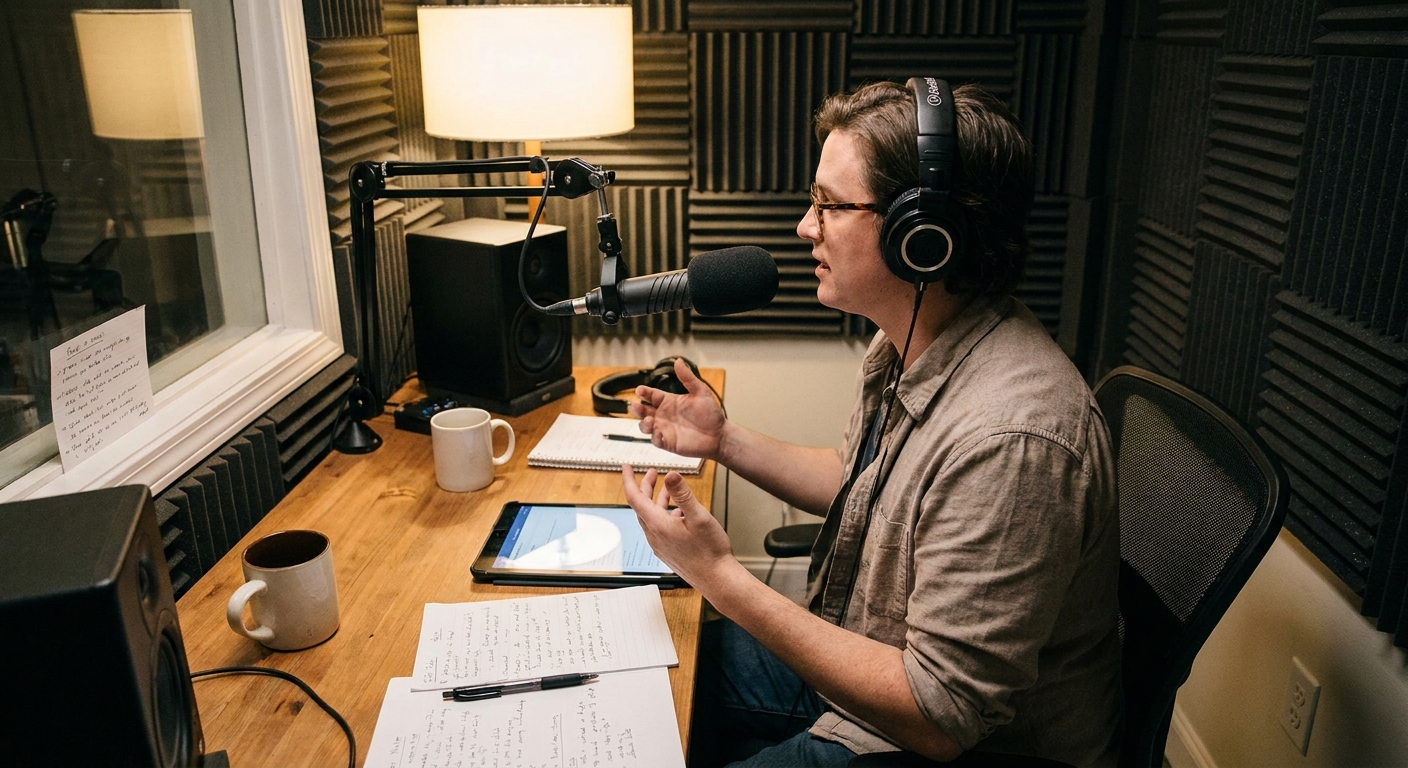
Audio is intimate. That is its power and its liability. Listeners can feel like they know the host, which makes speculation feel trustworthy and humor feel permissible in moments where it can land as cruelty. Ethical audio tends to slow down, cite sources, and separate verified fact from interpretation without theatrics.
Docuseries
Visual storytelling raises the stakes. Reenactments, stylized shots, and ominous scoring can manipulate emotion even when the underlying facts are thin. A responsible doc is careful with reenactments, avoids casting real people as villains without evidence, and does not treat law enforcement narratives as default truth.
Short-form creators
Short-form platforms reward speed and outrage. The ethical risk here is compression: complex investigations get reduced to a hot take, a face, and a theory. Misidentification, harassment, and armchair justice can snowball fast. If a creator cannot source, verify, and update responsibly, the algorithm rarely pays the price. Other people do.
When audiences join in
True crime fandom can mean community, fundraising, and credible tip generation. It can also mean merch drops built on a person’s death, meme-ification of perpetrators, and comment sections that treat families like characters who exist for our debate.
Creators shape this culture whether they admit it or not. If you frame a case as a puzzle, audiences will try to solve it. If you tease suspects without evidence, audiences will go looking for someone to punish. If you model empathy and restraint, a surprising number of people follow your lead.
Ethical true crime is not just about what you say. It is about what you set in motion.
Checklist for creators
I am not interested in purity tests. I am interested in guardrails. If you are making true crime content, these are the questions I wish were taped to every writer’s room wall.
- Source transparency: Can you point to primary documents and credible reporting for every major claim?
- Corrections policy: Do you have a clear way to correct errors, and do you actually use it publicly?
- Consent and contact: If you contact families or survivors, are you clear about what participation means and what they can decline?
- Minimize harm: Are you excluding details that increase risk to living people, including addresses, workplaces, or identifying info for minors?
- Perpetrator framing: Are you avoiding glorification, fan-service curiosity, and unnecessary mythmaking?
- Monetization ethics: If you profit, do you give back in ways that are accountable and not performative?
- Impact planning: Have you anticipated harassment, misidentification, and tip flooding, and built friction to prevent it?
Trauma-informed practice
Trauma-informed storytelling is not softness. It is accuracy with aftercare.
- Explain the ask. Be clear about the format, the timeline, and what “on the record” means.
- Avoid ambush timing. Do not surprise families with release dates or trailers. Give a reasonable heads-up when possible.
- Offer quote checks for sensitivity and accuracy. Not editorial control, but a chance to confirm names, dates, and high-stakes phrasing.
- Build in exit ramps. Let participants pause or stop without being framed as uncooperative.
- Provide resources. Point to support services when an episode includes domestic violence, sexual assault, suicide, or child harm.
Legal and operational limits
Ethics is not the only constraint. Responsible creators also work inside legal and operational realities, and pretending otherwise can get people hurt.
- Defamation risk is real. Naming an uncharged person as a suspect, or implying guilt, can have serious legal consequences and even more serious human ones.
- Ongoing investigations change the math. Some details are withheld for a reason. Sometimes “we can’t name X” is not cowardice, it is harm reduction.
- Minors and privacy. Juvenile records, sealed filings, and doxxing risks require extra restraint, even when information is technically findable.
- Jurisdictions vary. Privacy and recording laws differ by place. If you are reporting across borders, you need a process, not vibes.
Advocacy vs activism
Advocacy journalism and activism can overlap, but they are not the same thing. Reporting can pursue accountability without turning into a campaign. Partnerships with advocacy groups can bring expertise and access, and they can also introduce bias, tunnel vision, or conflicts of interest.
If you collaborate, disclose it. If you take funding, disclose it. If your sources are also stakeholders, say so plainly. The goal is not to sound pure. The goal is to keep the audience oriented in reality.
What listeners can do
You do not have to abandon true crime to be ethical about consuming it. You can be a better participant in the ecosystem, and yes, that matters because platforms track what we reward.
Small shifts
- Reward receipts, not vibes. Choose shows that cite sources, correct errors, and avoid sensational titles.
- Stop sharing unverified claims. Even with a “not sure if true” disclaimer, you are still distributing it.
- Do not play detective in public. If you have a legitimate tip, use official channels, not comment sections.
- Resist perpetrator celebrity. Skip content that centers charisma, looks, or “genius” narratives around violence.
- Support organizations directly. If a case intersects with domestic violence, missing persons, or wrongful convictions, donate to vetted groups instead of buying a themed hoodie.

Where the line is
The line is not did you tell a scary story. The line is whether the storytelling increases understanding and accountability without treating human suffering as disposable. Exploitation extracts. Advocacy invests. Exploitation asks, “Will this hook the audience?” Advocacy asks, “What will this do to the people who already paid the highest price?”
For those of us who love the genre and also critique it, the tension is the point. True crime can be a tool for justice. But only if we refuse to confuse consumption with care, and only if we keep choosing the harder kind of storytelling, even when the easier kind performs better.
FAQ
Is it unethical to profit from true crime?
Not automatically. Journalism costs money, and long investigations take time. The ethical question is whether profit incentives distort the reporting, and whether the people most affected are respected, not mined. Transparency about sourcing, corrections, and any financial contributions helps.
Do families have to approve a true crime story?
Legally, not always. Ethically, it depends on what you are doing and how. Many responsible reporters will attempt contact, explain the project clearly, and avoid unnecessary harm even if participation is declined. “They did not respond” is not a license to be reckless.
Are reenactments always a red flag?
Not always, but they raise risk. Reenactments can introduce invented details that viewers later remember as fact. If used, they should be restrained, clearly contextualized, and never used to sensationalize violence.
What is the biggest ethical mistake creators make?
Blurring fact and narrative momentum. When pacing becomes more important than accuracy, you get speculation, villain edits, and harm that cannot be undone once it spreads.