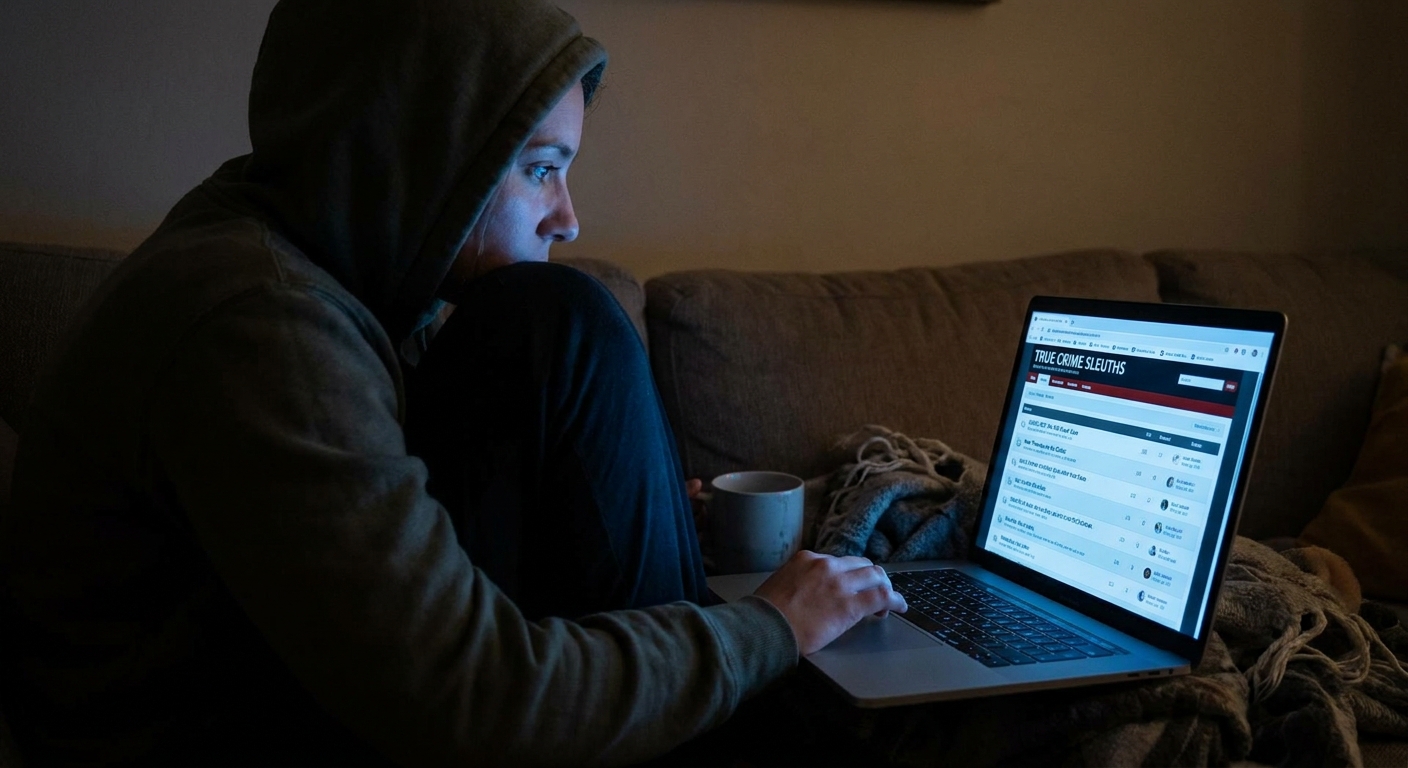
There is a version of armchair sleuthing that looks like curiosity with a conscience. It is slow, careful, and humble about what we cannot know from our couches. And then there is the other version: the dopamine chase that turns real people into plot devices, treats rumor as evidence, and crowdsources chaos into an active case.
This guide is for the first kind. The one that respects victims and families, keeps tip lines clear, and still lets you engage your brain in a way that feels meaningful instead of messy.

Start with one rule
Do not create new harm. If your post, theory, or “find” could reasonably increase harassment, contaminate witness memory, encourage vigilante behavior, or put someone at risk, stop. Ethical sleuthing is less about being right and more about being safe.
When I worked around court records, I learned fast that people treat documents like permission slips. “It is public” becomes “it is fair game.” But public availability does not equal public benefit, and it definitely does not equal public kindness.
A quick self-check
- Would I say this in front of the victim’s loved ones?
- Am I adding signal or just adding volume?
- Am I treating a person like a suspect because it feels narratively tidy?
- Could this create a false lead that wastes time?
- Is there any private individual who could be identified or targeted because of this?
What “public” really means
Armchair sleuthing should live on information that is lawfully available and ethically shareable. Those are not always the same thing.
Generally safer sources
- Court records that are officially released and not sealed. Availability varies by court and case type, and some exhibits may be restricted, redacted, or viewable only in person.
- Public statements from law enforcement agencies, prosecutors, or verified public information officers.
- On-the-record reporting from reputable outlets that cite documents and name sources.
- Published laws and procedures, like statute language, sentencing guidelines, and agency policies.
High-risk sources
- Police scanner snippets without context.
- Unverified “insider” accounts on TikTok, Reddit, or Facebook groups.
- Leaked materials that may be unlawfully obtained, or unlawfully shared or possessed depending on jurisdiction and any court orders.
- Private data dumps, including addresses, workplaces, license plates, and family names.
If you are not sure whether something crosses a line, treat it as a line. You can analyze a pattern of public court filings without re-uploading someone’s home address that appeared once in a poorly redacted document.
Verification keeps you ethical
Most harm in online sleuthing does not come from malice. It comes from confidence built on shaky sourcing. A screenshot becomes “confirmed.” A rumor becomes “everyone knows.” Then the dogpile starts.
The three-source habit
Before you treat a claim as factual, try to find:
- The primary source (the actual filing, the official statement, the full video, the complete transcript).
- A reputable secondary source (experienced reporter, court reporter feed, or outlet with editorial standards).
- Independent corroboration (another document, another outlet, or a consistent timeline across multiple verifiable points).
Read past the excerpt
True crime is particularly vulnerable to cherry-picking. A two-sentence excerpt from a 30-page affidavit can be technically accurate and still deeply misleading if it omits context, uncertainty, or what investigators did next.

Do not interfere
This is where “helpful” can become harmful fast. Investigations are not scavenger hunts, and law enforcement is not crowd-control for online communities.
Do not
- Contact potential witnesses, friends of the victim, relatives of a suspect, or anyone adjacent to the case to “ask questions.”
- Show up to scenes, vigils, search areas, or court to livestream strangers.
- Send mass tips based on speculation. One thoughtful, specific tip beats 200 speculation-based messages.
- Publicly pressure police departments to “confirm” rumors or release evidence early.
- Attempt amateur forensics in ways that invite tampering, like encouraging people to revisit locations or handle objects.
If you truly think you have a tip
Keep it short, factual, and anchored to what you personally observed or can document cleanly.
- Use official tip channels listed by the investigating agency.
- Provide timestamps, locations, and links to original sources where possible.
- Describe, do not theorize. “This photo shows X at Y time” is better than “This proves Z.”
- Send it once, then stop. Repeated follow-ups can clog channels.
Micro-examples
Better: “On 5/12 at about 9:10 p.m., I saw a dark blue pickup with a missing left taillight heading north on County Road 4 near the gas station at the corner of Pine. I took a photo; it is attached. My contact info is below.”
Not this: “I think the blue truck is the killer’s and the driver looked guilty. Everyone should check the owner list.”
And if your “tip” is really just a theory, it does not belong in a tip line.
Stop naming suspects
If you want to be ethical in true crime spaces, make peace with an uncomfortable truth: most online suspecting is just storytelling dressed up as investigation.
Here is the checklist of what tends to fuel harmful misidentification: a person seems “off,” they did not grieve the “right” way, they gave an awkward interview, they had a messy relationship, they live nearby, they resemble a composite sketch, they own a similar car. None of that is proof. Much of it is bias.
Better questions
- What is the source of this claim, and how direct is it?
- Is this behavior actually unusual, or just unfamiliar to me?
- Am I assigning guilt because it makes the narrative feel resolved?
- What would be the real-world consequence if I am wrong?
If you cannot answer that last one without feeling a little sick, you are already close to the line.
Doxxing is not research
This should not need saying, but it does: doxxing is not sleuthing. It is a harm multiplier.
Do not share
- Home addresses, phone numbers, personal emails
- Workplaces, schedules, children’s schools
- Vehicle plates and routine locations
- Non-public social media accounts and family members’ identities
- Maps to gravesites, memorials, or private family property
Even in solved cases, the internet has a long memory and an itchy trigger finger. Protect the living, including people you do not like.
Extra care with minors
If a case involves minors, treat that as a hard boundary, not an interesting wrinkle.
- Do not identify minors who are victims, witnesses, or related to the people involved, even if their names circulate online.
- Do not speculate about a minor’s role, behavior, mental health, or “what they must have seen.”
- Do not share school information, schedules, sports teams, or photos pulled from family accounts.
- Assume juvenile records are restricted, and treat any “leaks” as a red flag.
Trauma-aware language
Ethics is not only about what we do. It is about how we speak.
Small edits that change the tone
- Say “the victim was killed” instead of language that sensationalizes or sexualizes violence.
- Say “reported” or “alleged” when that is what the record supports.
- Avoid diagnosing strangers with mental illnesses based on vibes or one clip.
- Do not turn perpetrators into antiheroes. Attention is a currency.
One of the simplest ethical moves is refusing to treat trauma as content seasoning. If a detail is included only to shock, it probably does not belong.
Analyze without a fandom
True crime and pop culture do intersect, and pretending they do not is naive. But the moment a case becomes a fandom, the priorities flip: narrative coherence beats accuracy, “our theory” beats uncertainty, and outsiders become enemies.
Try the “case file” approach
- Separate facts, claims, and interpretations in your notes.
- Timestamp your sources. Early reporting is often corrected later.
- Track what you do not know as actively as what you think you know.
- Update publicly if you shared something wrong. Quiet deletions do not undo harm.
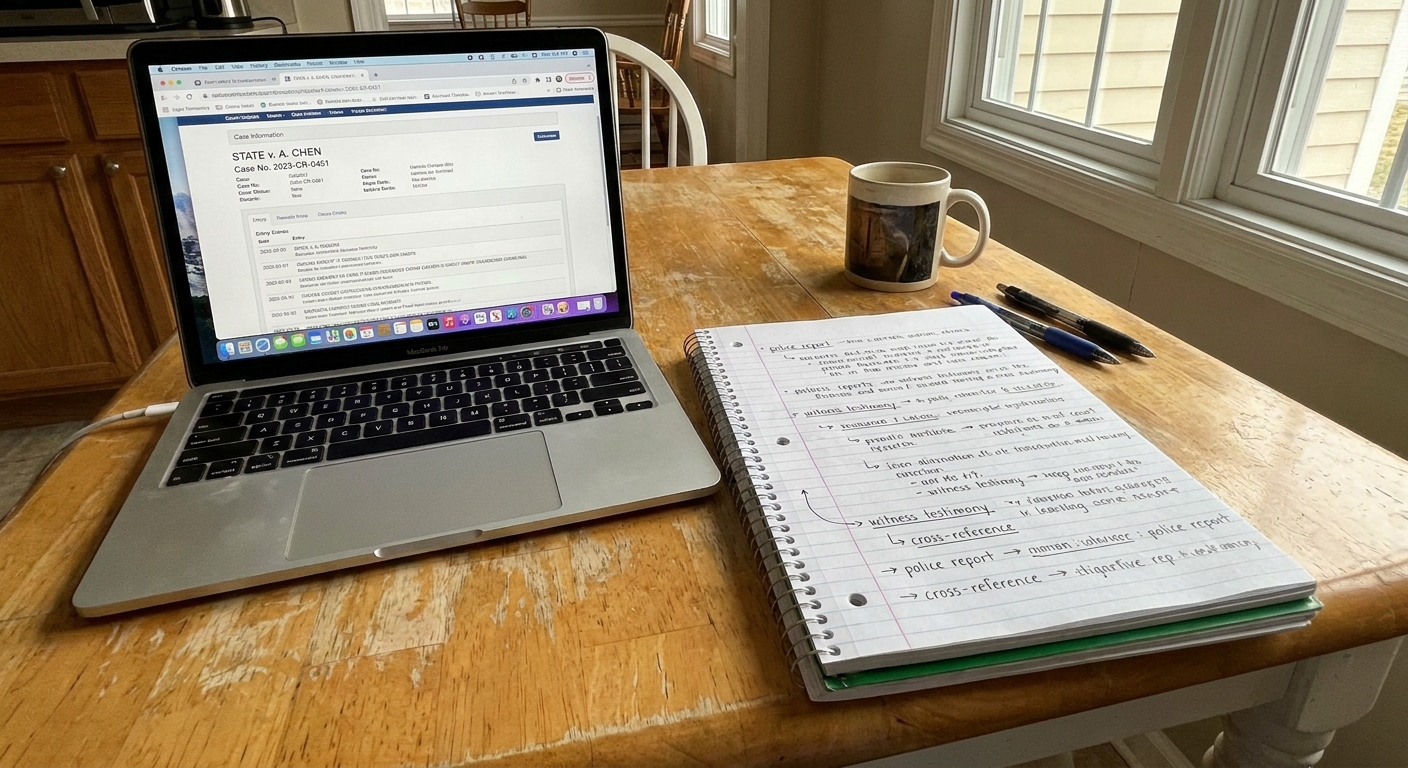
Ethical OSINT basics
Open-source intelligence sounds intimidating, but the ethical version is mostly disciplined common sense: use lawful sources, document what you did, and do not expose private people.
Boundaries
- Stay on official pages and verified accounts whenever possible.
- Do not circumvent paywalls, logins, or access restrictions, whether it is a terms-of-service issue or a legal one.
- Do not “test” security or attempt to access restricted databases.
- Do not scrape and re-upload personal social media content from private individuals.
When location sleuthing gets dangerous
Geolocation can be useful in journalism, but in true crime communities it often becomes a fast track to harassment. Avoid posting:
- Exact coordinates of someone’s home
- Speculative maps of “where the body must be”
- Routes, trails, or “search areas” for ongoing cases
If professionals need geolocation help, they will ask through official channels with guardrails.
Respect the courtroom
Trials are public, but the people inside them are not characters you get to rewrite. Ethical sleuthing around court proceedings means:
- Do not clip witnesses into “gotcha” content, especially civilians.
- Do not harass jurors or attempt to identify them.
- Do not treat filings as entertainment leaks. Protective orders exist for reasons that are often safety-related.
- Distinguish evidence from argument. Attorneys say many things that are not “facts,” they are strategies.
Know the legal edges
This is not legal advice, but it is worth knowing where ethics and legal risk often overlap.
- Defamation risk: stating or implying false facts about a real person can create real-world damage and legal exposure.
- Contempt and court orders: protective orders and sealing rules can limit what gets shared and when, even if something has already leaked.
- Harassment and stalking laws: repeated contact, threats, or coordinated targeting can cross from “discussion” into criminal behavior.
- Platform consequences: even when something is legal, it may violate site rules and result in takedowns or bans.
If you are unsure, choose the safer path. You can be curious without being reckless.
Community rules
If you run a Discord, subreddit, group chat, or comment section, you are building the culture whether you mean to or not. A few clear rules prevent a lot of damage.
Baseline rules
- No doxxing, ever, including “soft” doxxing like workplace hints.
- No naming private individuals as suspects without formal charges and credible sourcing.
- No contacting parties involved, including friends, family, and employers.
- Require sources for factual claims, and label speculation clearly.
- Zero tolerance for harassment, victim blaming, or “they deserved it” rhetoric.
- Slow down breaking news. Implement a waiting period before theory threads.
Watch the incentives
Some of the ugliest behavior in this genre is not about evil intent. It is about rewards. Engagement spikes, ad revenue, Patreon goals, and “breaking news” clout can push people to post faster, harsher, and sloppier.
Simple counter-moves
- Do not monetize speculation about private individuals.
- Delay posting when details are unverified or emotions are running hot.
- Reward corrections the same way you reward “new information.”
When to step back
Ethical engagement also means knowing when the genre is taking more than it gives.
Signs it is time to log off
- You feel personally invested in being “the one who solves it.”
- You are losing sleep or scanning strangers for “tells.”
- You are arguing more than you are learning.
- You are consuming graphic details you would never want someone to repeat about your family.
There is no badge for endurance. Take breaks. Switch to a different kind of story. Listen to something lighter. Your nervous system counts as part of the ethical equation.
FAQ
Is it ever okay to publicly share theories?
If you do, keep them clearly labeled as theory, keep them grounded in publicly verified facts, and avoid naming private individuals. Ask yourself whether the theory adds insight or simply stirs suspicion. In active cases, the safest choice is often to keep speculative threads private or not do them at all.
What if law enforcement is asking the public for help?
Follow the instructions exactly. Share the official poster, the official contact information, and the official description. Do not add your own suspect list, and do not “enhance” images in ways that introduce artifacts and misinformation.
Can I request records?
In many places, yes. But be mindful of timing and purpose. Record requests can burden small agencies, especially broad or vague ones, so narrow your scope and ask only for what you can use responsibly. Some materials may be restricted for good reasons. If you request documents, do not re-post sensitive information and do not treat partial releases as proof of a cover-up.
How do I correct something I shared that was wrong?
Correct it loudly and specifically. State what you got wrong, link to the corrected source, and avoid repeating the false claim in a way that spreads it further. If your post caused harm to a private person, prioritize taking it down and naming the harm clearly.
The bottom line
Ethical armchair sleuthing is not about proving you are smarter than investigators or faster than the news cycle. It is about engaging responsibly with public information while remembering that the people at the center of these stories do not get to log off.
If we love this genre because it asks big questions about justice, power, and resilience, then our behavior has to match that. Curiosity, with boundaries, can be part of the ecosystem. Curiosity without boundaries becomes another thing survivors have to endure.