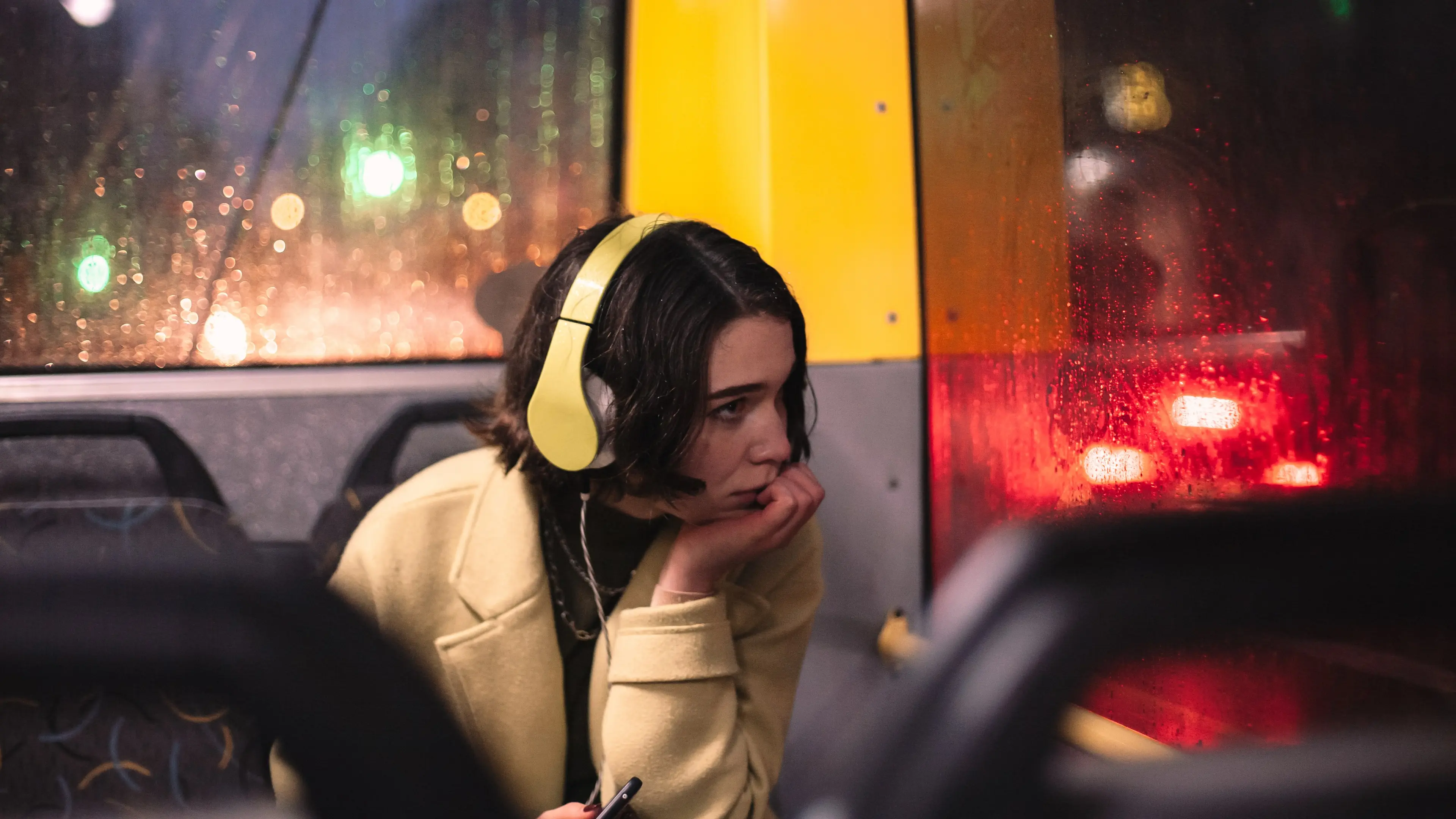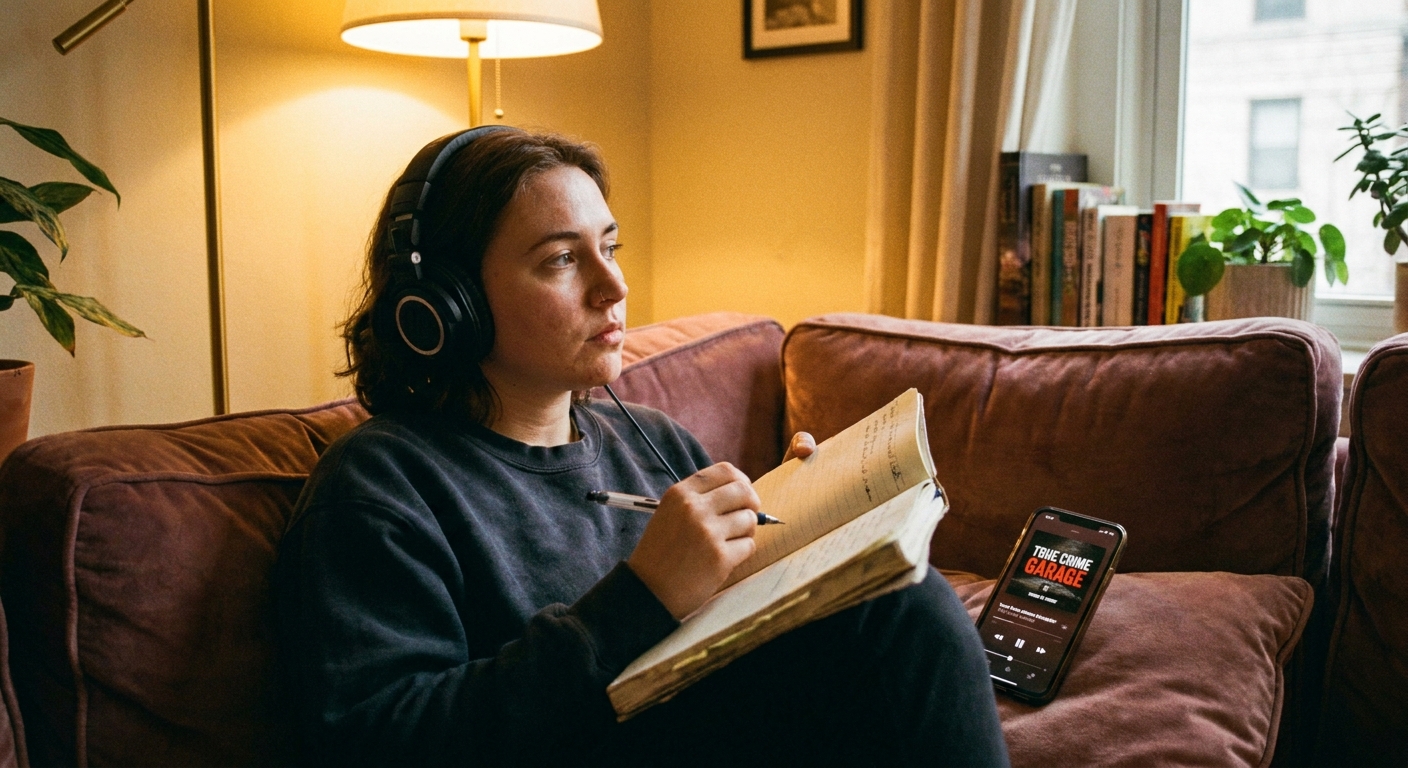
At some point, many true crime fan groups have the same conversation: why is the room, the feed, the live show line, and the group chat so often dominated by women?
The lazy answer is “because women love scary stories.” The more honest answer is that true crime, at its best, sits at an intersection of survival education, empathy practice, social analysis, and community ritual. Think: learning how coercive control works, recognizing the cracks where institutions fail, and talking through what we wish someone had said or done sooner. It also exists inside a media ecosystem that has not always treated victims, especially women and marginalized people, with the respect they deserve.
So let’s talk about the gender divide without reducing anyone to stereotypes. Not all women like true crime. Not all men avoid it. Nonbinary people are here too, even when audience data does not bother to count them well. But the skew shows up often enough to be worth naming, and the reasons are both deeply personal and broadly cultural.

What the data shows
Across platforms and surveys, true crime is frequently reported to skew female. Exact numbers vary by how “true crime” is defined, how gender is measured, and whether the sample reflects one platform or the broader public. Still, a few public snapshots give the pattern some concrete shape.
- Consumer polling (U.S.): A YouGov survey fielded in the U.S. (October 2022) found women were more likely than men to say they enjoy true crime content, with interest highest among younger and middle-aged women. (As with most polling, results depend on question wording and what counts as “true crime.”)
- Platform reporting: Streaming platforms and podcast networks routinely release trend reports and audience breakdowns. In those reports, true crime commonly over-indexes with women compared with all-audio or all-podcast audiences on the same platform, even though the exact split shifts year to year and by publisher.
- Overall listening context: Edison Research’s Infinite Dial has repeatedly shown that U.S. podcast listening overall is not as lopsided by gender as people assume, with the balance moving depending on whether you look at “ever listened,” “monthly,” or “weekly” listening in a given year. That makes a genre-specific skew, like true crime’s, easier to notice by comparison.
What matters more than any single chart is what the skew suggests: for many listeners, this is not just casual entertainment. It can function as a place to make sense of risk, institutional failure, and the ways public narratives about victims have historically been shaped by bias and sensationalism.
One more complication: “true crime” is a suitcase label. Investigative reporting, courtroom analysis, victim advocacy storytelling, and chatty recaps can all live under the same category tab. Different formats draw different audiences, and the genre’s gender skew can look stronger or weaker depending on what, exactly, is being counted.
Scope note: This piece is written primarily from a U.S. media context. Audience patterns and gender norms vary internationally, and the genre can land differently depending on local crime rates, policing practices, and cultural attitudes toward risk and public storytelling.
Safety is lived
If you want the simplest explanation, start here. Many women report being socialized early to manage risk. The world teaches a lot of us to run constant background checks: phone charged, location shared, ride details verified, exits noted, routes chosen for lighting, instincts double-checked.
True crime can become an extension of that vigilance, for some listeners. Not because they believe they can “solve” danger by memorizing worst-case scenarios, but because narratives offer patterns. You hear how someone gained access. You learn how trust was exploited. You clock the moment where a system failed to intervene.
Pattern recognition
People often try to reduce anxiety by seeking information and structure. True crime offers a beginning, middle, and end to chaos. Even when the ending is unjust, the story still names the threat and traces its shape. That can feel stabilizing in a world where real harm is often random and underpunished.
There is a catch: safety listening can slide into hypervigilance. When your media diet is saturated with worst outcomes, it can distort your sense of probability. The healthier version of this impulse is learning boundaries and situational awareness. The unhealthier version is believing danger is everywhere, always.
- What it can offer: language for red flags, confidence to set boundaries, awareness of coercion tactics
- What it cannot promise: control over other people’s choices, immunity from systemic failures
Cast as the target
Many high-profile true crime cases foreground violence against women. Part of that reflects reality: gendered violence exists at scale, including intimate partner violence and sexual violence. Part of it is also selection: which victims become household names is shaped by editorial decisions, policing priorities, and a news economy that has long amplified certain stories and certain victims more than others.
If you want a concrete example of what “mishandled” can look like, it is the familiar mix of sensational framing, victim-blaming language, and selective attention. Media critics often discuss this through concepts like “missing white woman syndrome,” a term used in U.S. media commentary to describe the disproportionate coverage some missing persons cases receive. It is often associated with journalist Gwen Ifill, who discussed the pattern in mainstream outlets, though the phrase and the critique circulate more broadly than any single source.
When you grow up watching women framed as targets, you do not just consume these stories. You measure yourself against them. Would I have opened that door? Would I have trusted that person? Would anyone have believed me?
This is one reason certain subgenres pull a heavily female audience: disappearance cases, intimate partner violence, stalking, coercive control, serial predation. These are stories where the threat is not a movie monster. It is a date. A coworker. An ex. A “nice guy.” A person who knows the victim’s routines.
The justice gap
Another theme I hear again and again, especially from women who have had their own brush with violence or harassment, is the need to witness.
In the record of a case, you sometimes see what never made it into the headlines: the ignored reports, the notes about escalating behavior, the friends who tried to intervene, the paper trail that was there but not acted on. A protective order filed. A call log of repeated harassment. A complaint written off as “a domestic issue.” For some listeners, true crime is where those realities are named plainly instead of minimized.
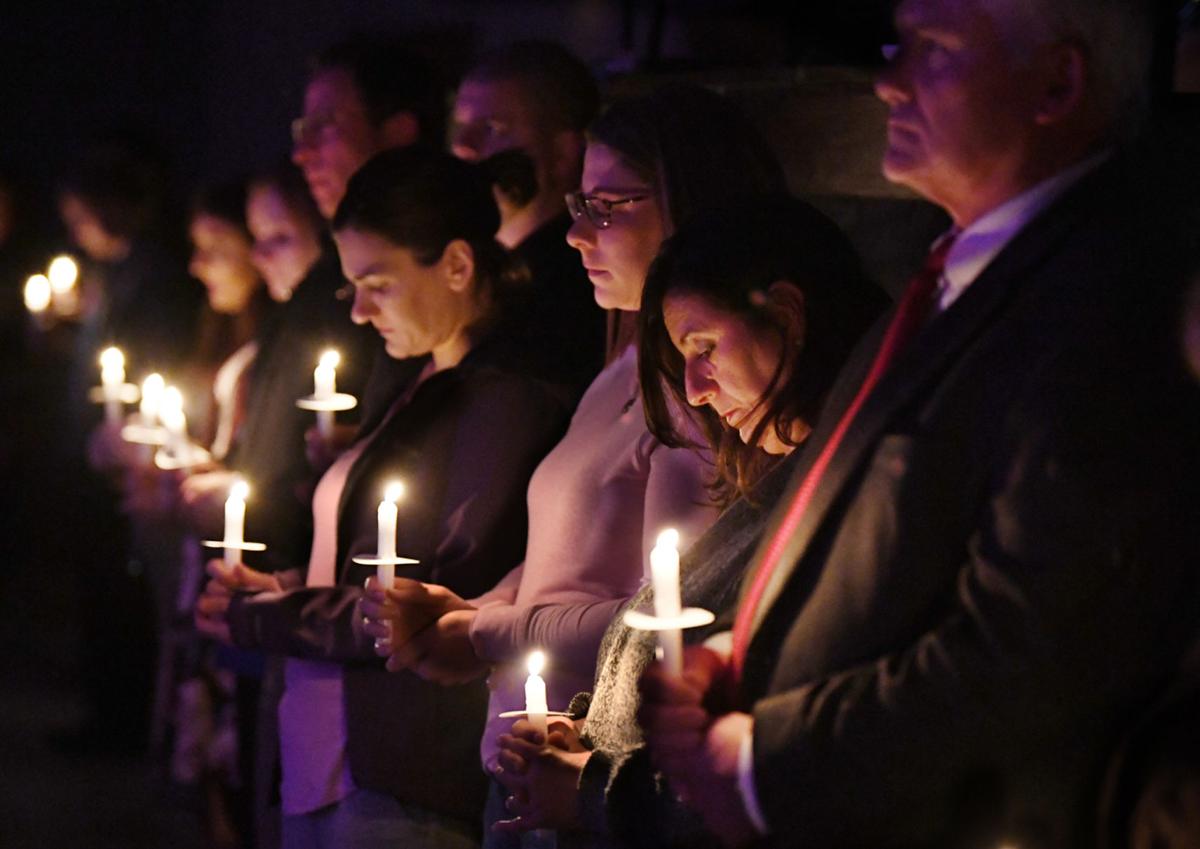
Thoughtful true crime fandom can become a witness community. It says: we see what happened, we name it, and we remember the person it happened to. That is emotionally different from rubbernecking.
Witnessing is not consuming
This is where the ethical line shows up. Witnessing asks for restraint. It means resisting the temptation to treat victims like characters or to treat trauma like a twist. It also means acknowledging that families and survivors do not always want public attention, even when audiences believe they are “helping.” Consent, dignity, and the right to privacy have to matter as much as curiosity.
The audience tilt toward women may partly reflect who has historically been forced to become fluent in the language of harm in order to be taken seriously.
Fear, contained
There is also an entertainment component. The genre offers a container for fear. You can engage with darkness while sitting on your couch, with the lights on, knowing you can pause and walk away.
For some listeners, that controlled fear is cathartic. It can create a sense of mastery: I can look at the thing I am afraid of and survive the encounter. The same reason people love horror can apply here, but true crime carries extra charge because it is real.
And, for better or worse, many women are already managing fear in daily life. A narrative that acknowledges that fear can feel validating, even when it is unsettling.
It also helps explain why some listeners choose fictional crime or horror instead. Fiction can offer the same adrenaline and pattern-chasing without the ethical weight of someone else’s real suffering. For people who are sensitive to exploitation, that distinction matters.
Community matters
Modern true crime is rarely a solitary experience. It is group texts and Reddit threads. It is coworkers swapping episode recs. It is “listen to this part” voice notes at midnight.
There is research on kin work and emotional labor suggesting that, in many families and social circles, women are more likely to do the day-to-day maintenance work that keeps relationships running, from checking in to making plans to smoothing conflict. Scholars commonly associated with these ideas include Micaela di Leonardo (kin work) and Arlie Hochschild (emotional labor), with “kin-keeping” also appearing broadly across family studies literature rather than belonging to any single source. This is not about women being inherently “better at community.” It is about what many are trained into, expected to do, and penalized for refusing.
True crime plugs neatly into that kind of relational culture: you process together, compare reactions, argue ethics, and sometimes mobilize around advocacy.
Voice and invitation
One of the biggest shifts in the last decade is the dominance of conversational podcasting. Many popular shows are hosted by women or feature women speaking in an intimate, friend-to-friend tone. That voice can make difficult content feel navigable. It also changes who feels invited into the space.

Expertise, claimed
It is worth saying plainly: women have not always been encouraged to be “experts” in public. But true crime has created lanes where women can be authorities without asking permission.
Fans become lay investigators. Hosts become researchers. Viewers become critics of police procedure, prosecutorial strategy, media ethics, and forensic science. In a culture that can dismiss women’s fear as hysteria, true crime provides receipts: timelines, transcripts, 911 calls, documented patterns of coercion.
This can be empowering. It can also become corrosive when “doing research” turns into harassment, armchair accusations, or certainty built on incomplete information. The same tools that educate can inflate confidence beyond the facts.
Intersection matters
Gender is not the only axis that shapes who shows up, what stories get told, and what those stories feel like. Race, class, immigration status, disability, sexuality, and gender identity all change the risk landscape and the justice landscape.
True crime is full of cases where the public reaction depended on whose disappearance was treated as “newsworthy,” whose family was believed, and whose community was overpoliced, underprotected, or both. For some listeners, that makes the genre feel like recognition. For others, it makes the genre feel like a rerun of erasure. Both responses are rational.
Ethics
You cannot talk about why women love true crime without talking about why some women recoil from it. The genre has a history of sensationalism, especially in cases involving sexual violence. And because headline storytelling so often centers women and girls as victims, the ethics can feel personal fast.
It helps to name a difference that gets blurred: true crime as reporting versus true crime as entertainment. Reporting aims for documentation, accountability, and restraint. Entertainment aims for momentum, shock, and retention. Plenty of creators land somewhere in between. The ethical problems tend to spike when the incentives are pure spectacle and the people harmed become props.
Many women stay in the genre by choosing specific creators, formats, and boundaries. Others leave after one too many episodes that treats trauma like a set piece. Families and survivors have been vocal about this for years: attention is not the same thing as care, and “awareness” is not a free pass to monetize someone else’s worst day.
Ethical listening
- Victim-centered language: the person is not reduced to the way they died
- Context over gore: emphasis on behavior patterns, systems, and prevention
- Transparency: clear sourcing, corrections, restraint with unverified claims
- Impact awareness: respect for survivors, families, and communities affected
Women making up a large share of the audience does not automatically make the genre ethical. But it may help explain why so many listener communities push hard on accountability. The audience that feels closest to the risk often demands the most care in how the story is told.
Not new
It is tempting to treat true crime’s female audience as a “podcast era” phenomenon. In reality, women have been reading crime narratives for generations: newspaper trial coverage, crime magazines, paperback case files, courtroom memoirs.
What changed is distribution and legitimacy. Streaming platforms turned niche cases into prestige television. Podcasts turned research into a weekly ritual. Social media made commentary and critique part of the experience. Algorithms and monetization did the rest, rewarding stories that keep people listening, sharing, and subscribing.
And in that mainstreaming, women were already there. They just finally became visible as a market, and then as a community.
Where men fit
Men do listen to true crime. The difference is often not interest in crime, but the emotional entry point, plus what is packaged, promoted, and socially “allowed.” Marketing matters. So do category labels. And social permission matters too: people tend to reach for what they are told is normal for them to like, especially in public.
It is also worth being cautious here: platform-by-platform data is uneven, and neat subgenre splits can drift into stereotype. In plenty of listening communities, though, you will hear a recurring anecdotal pattern: some men gravitate toward shows framed as institutional reporting, courtroom analysis, or forensic process, while some women gravitate toward victim-centered disappearance and interpersonal violence cases. These are tendencies in certain spaces, not rules, and plenty of listeners cross every line.
Motivation also changes by subgenre. A deeply reported investigation, a courtroom recap, and a comedic retelling may all sit under “true crime,” but they pull different audiences for different reasons. Lumping them together can blur what is actually happening.
Is it for women?
No. But it is shaped by women’s realities.
When a genre repeatedly returns to stories of gendered harm, when it offers a way to rehearse boundaries and name coercion, when it builds communities around processing fear and injustice, it makes sense that women show up in large numbers. Not because women are uniquely fascinated by violence, but because women are often asked to live with its possibility in a way that is both ordinary and exhausting.
If true crime wants to deserve its biggest audience, the next era should be defined by what that audience has been asking for all along: better sourcing, more humility, fewer lurid shortcuts, and storytelling that treats victims as people, not content.
Quick questions
Is it unhealthy to listen to true crime as a woman?
It depends on how it affects you. If it increases anxiety, disrupts sleep, or reinforces a sense that danger is constant, it may be time to take a break or switch to more victim-centered, less graphic shows. If it helps you feel informed, connected, and thoughtful about systems, it can be a valid form of engagement.
Does listening actually make you safer?
Listening can teach concepts like boundary setting and recognizing manipulation, but it cannot guarantee safety. The most reliable takeaway is usually practical: trusting discomfort, planning exits, verifying information, keeping social supports strong, and remembering that prevention is also systemic, not just personal.
Why do some women hate true crime?
Because they see, correctly, how often the genre has exploited women’s suffering. They may also have personal trauma that makes the content feel invasive rather than empowering. Their critique is not anti-curiosity. It is pro-humanity.
Any resources if these stories hit too close?
If you or someone you know is experiencing violence or stalking, consider reaching out to a local service or a national hotline in your country. In the U.S., the National Domestic Violence Hotline (thehotline.org) and RAINN (rainn.org) are starting points.