True crime has always been a genre of receipts. Transcripts. Timelines. Maps. Photos you wish you could unsee. So it makes a strange kind of sense that some of the most thoughtful true crime storytelling right now is happening in graphic novels, where creators can show their work without turning real suffering into spectacle.
At their best, true crime graphic novels borrow the discipline of investigative reporting and the pacing of great comics. They slow you down. They force you to look at context, not just the headline. And when the creators do it right, the art becomes a kind of ethical buffer, letting us understand what happened without reproducing harm.
Below are seven essential reads that show what the form can do, plus a few practical notes for reading like a visual investigator.
Why comics fit true crime
Graphic nonfiction has a built-in advantage: it can reconstruct complex events while clearly signaling what is documented, what is remembered, and what is inferred. A panel can hold two truths at once, like a witness’s testimony alongside what the evidence suggests. The gutter, that little space between panels, becomes a place to acknowledge uncertainty.
That matters in true crime. Real cases are messy. Memory is messy. The justice system is messy. And a good graphic novel can put that mess on the page without pretending it is a neat, bingeable puzzle.
- Visual timelines make contradictions easier to spot.
- Scene reconstruction can be precise without being exploitative.
- Document inserts like letters, clippings, and courtroom moments can be contextualized instead of fetishized.
- Point of view is harder to hide. You feel the creator’s presence, for better or worse.
7 essential reads
These picks lean toward the journalistic and the justice-adjacent side of true crime. Not all are traditional murder cases, because crime storytelling is also about power, harm, and who gets believed. To keep it clean, each entry is labeled by format. Also, this list tilts U.S. and U.K. because the English-language canon does. If you want a wider geographic spread, check the add-ons below.
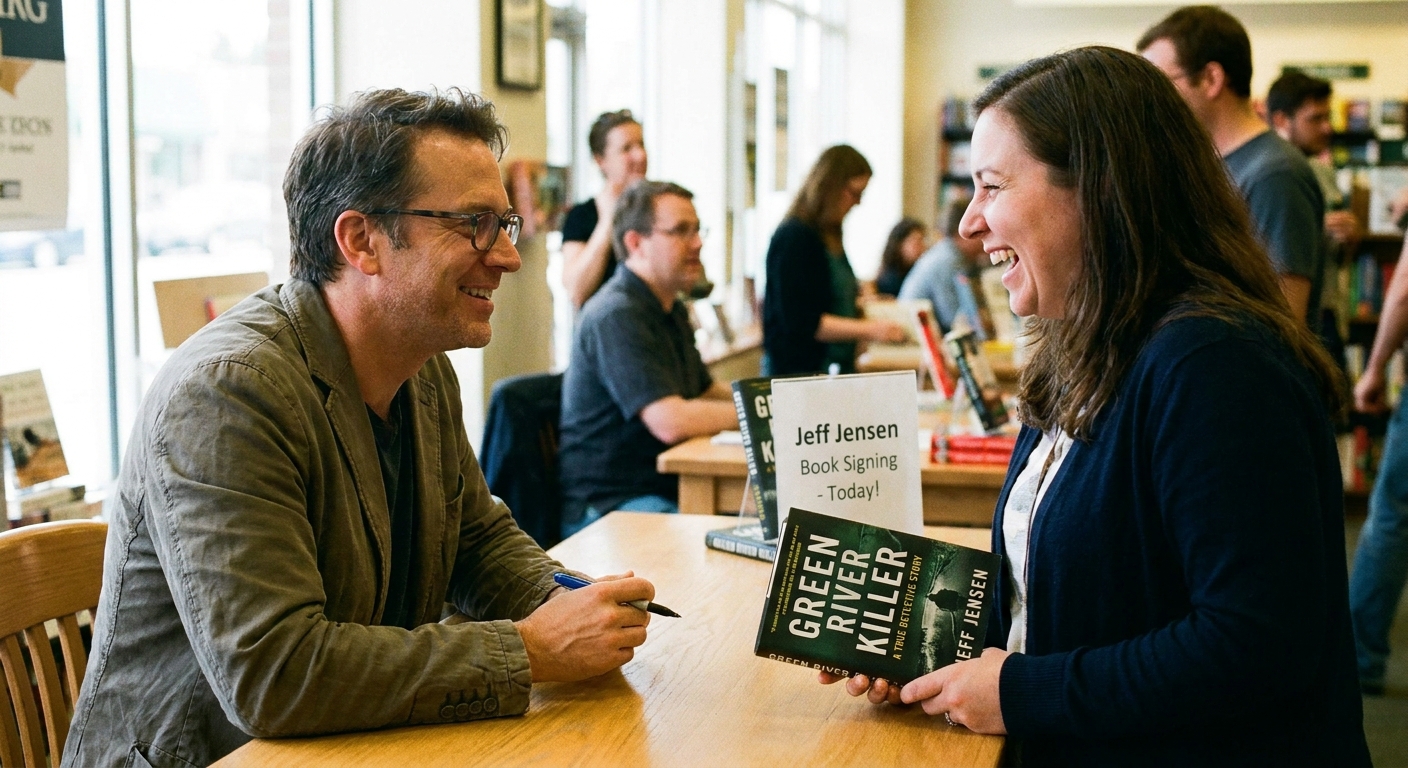
1) Green River Killer: A True Detective Story (Jeff Jensen and Jonathan Case)
Format: Nonfiction (reported memoir)
This is a master class in restraint. Written by journalist Jeff Jensen with art by Jonathan Case, Green River Killer follows the author’s father, a longtime detective, and the decades-long investigation into Gary Ridgway. The book is less about lurid details and more about the toll of unresolved violence, on families, on investigators, and on a community asked to keep living.
Why it belongs here: it treats the case as a human catastrophe, not a serial killer “legend,” and it shows how the work of policing intersects with obsession, burnout, and moral injury.
Read if you like: methodical investigations, family dynamics inside law enforcement, and a clear-eyed look at what “closure” really means.
2) The Silence of Our Friends (Mark Long, Jim Demonakos, Nate Powell)
Format: Historical nonfiction (dramatized from real events)
Set in Houston in 1968, and rooted in the Houston school boycott and the subsequent trial, this graphic narrative centers on the civil rights era and the criminal justice system’s role in reinforcing racial power. While it is not a single-case procedural, it is absolutely a crime story in the way that matters: who gets targeted, who gets protected, and how fear becomes policy.
Why it belongs here: it expands “true crime” beyond individual perpetrators and into systems that produce harm.
Read if you like: courtroom tension without sensationalism, community perspective, and stories that connect law, media, and public opinion.
3) My Friend Dahmer (Derf Backderf)
Format: Memoir (perpetrator-adjacent)
This memoir, part personal recollection and part social portrait, is one of the most discussed books in the true crime comics space for a reason. Derf Backderf knew Jeffrey Dahmer in high school and draws an adolescence where warning signs were present, but social dynamics and institutional blind spots let them fade into the background.
A note on ethics: this is perpetrator-adjacent by design. The value here is not in mythologizing Dahmer, but in documenting how communities fail to intervene and how “weird kid” becomes a dangerously flattening label.
Read if you like: early-warning narratives, social context, and books that interrogate hindsight rather than pretending it is clarity.
4) From Hell (Alan Moore and Eddie Campbell)
Format: Historical reconstruction (researched, explicitly speculative)
Yes, it is dense. Yes, it is debated. And yes, it is essential if you want to understand how true crime and comics have been tangled for decades. From Hell is a heavily researched, grimly atmospheric reconstruction of the Jack the Ripper murders that openly commits to a contested theory rather than presenting itself as the final word. It is not a reliable account of who did it, and it does not pretend to be. The appendix reads like a bibliography for obsession.
Why it belongs here: it is a case study in how reconstruction can blur into speculation. Reading it with a critical eye is part of the experience.
Read if you like: Victorian history, investigative rabbit holes, and meta-commentary on how societies turn victims into footnotes.

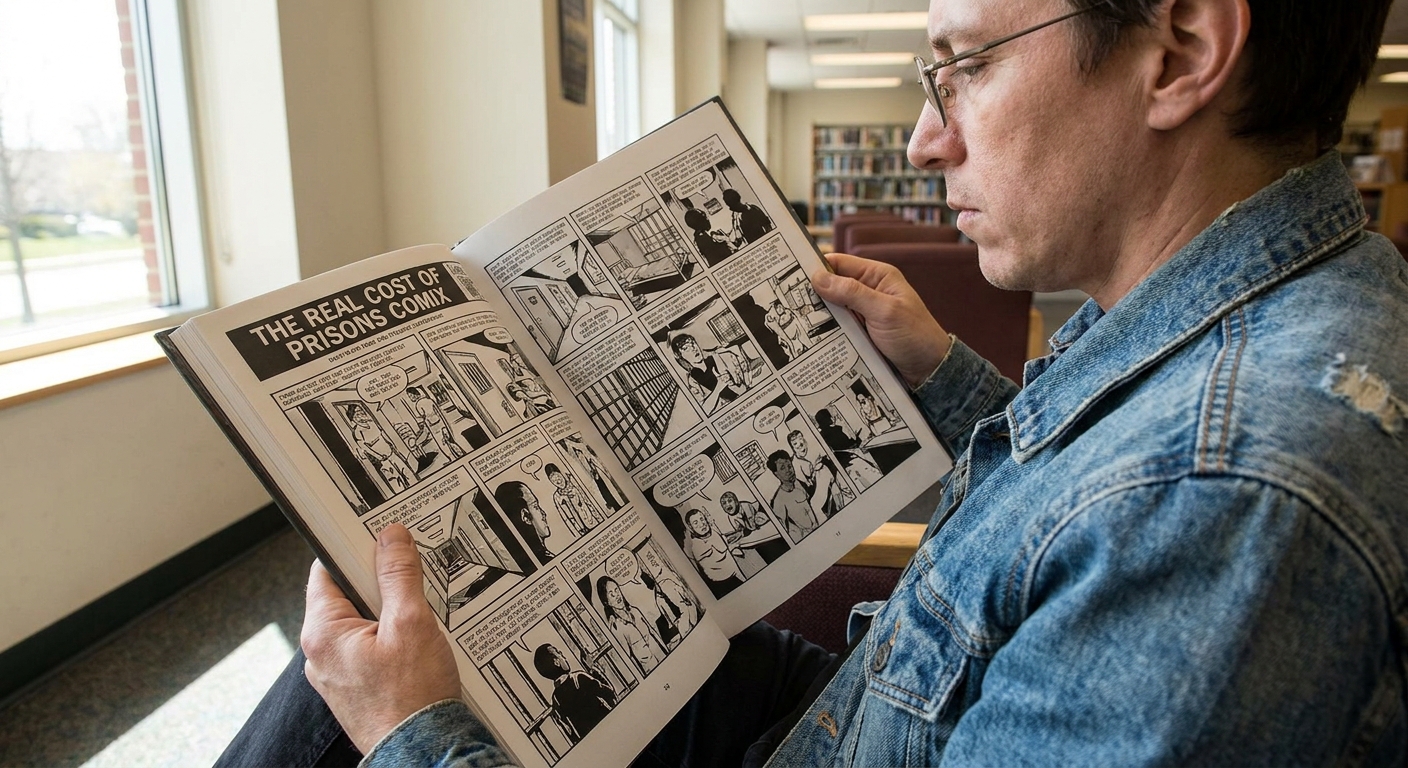
5) The Real Cost of Prisons Comix (edited by Lois Ahrens, Real Cost of Prisons Project, and various artists)
Format: Nonfiction (advocacy and reporting)
If you want crime storytelling that refuses the tidy “case closed” arc, this anthology goes straight at incarceration, policing, and the machinery that makes harm feel normal. It mixes personal accounts, on-the-ground reporting, and visual argument, which is exactly the point: the system is the plot.
Why it belongs here: it treats the justice system as a lived reality with policies attached, not a backdrop for clever detectives.
Read if you like: abolition-informed analysis (in conversation with prison abolition), documentary textures, and books that make you rethink what “crime” even means on the page.
6) Did You Hear What Eddie Gein Done? (Harold Schechter and Eric Powell)
Format: Nonfiction (biographical true crime)
Built on a historian’s backbone, this book pairs Harold Schechter’s long-running expertise in American crime with Eric Powell’s expressive, unsettling art. The result is less “monster of the week” and more an excavation of environment, pathology, and the media machinery that turns a person into a legend.
Why it belongs here: it models how to tell notorious stories without letting notoriety become the point.
Read if you like: cultural history, careful contextualization, and creators who understand that horror and humanity can coexist on the same page.

7) Incognegro (Mat Johnson and Warren Pleece)
Format: Fiction (historically grounded)
Incognegro is a historical crime thriller rooted in real patterns of racial terror, especially the violence surrounding lynching and the investigative risks taken by Black journalists. It is fiction, but it is historically informed in a way that makes it essential reading for anyone who wants to understand how “true crime” can either challenge or reinforce power.
Why it belongs here: it centers journalism as an act of survival and exposes how public violence is often protected by polite narratives.
Read if you like: investigative reporter protagonists, period detail, and stories that treat truth as a contested terrain.
If you want more
A few more titles that pair well with the list above, depending on what you want from the genre:
- Safe Area Goražde (Joe Sacco): graphic journalism with forensic attention to testimony, power, and aftermath.
- Stuck Rubber Baby (Howard Cruse): fiction with a tight grip on historical violence and the social conditions that enable it.
- March (John Lewis, Andrew Aydin, Nate Powell): not “true crime,” but essential for understanding state power, policing, and how records become narrative.
- Paying the Land (Joe Sacco): a model for reporting as a visible process, including what cannot be resolved cleanly.
- Pyongyang (Guy Delisle): not true crime, but a sharp non-U.S. perspective on surveillance, control, and the everyday texture of state power.
How to read ethically
I mean this literally and ethically. Comics invite a different kind of attention than prose. If you want the “deep dive” feeling without turning into a conspiracy corkboard person, here are a few habits that help.
- Track what is sourced. Look for endnotes, bibliographies, or creator notes. If there are none, read with extra skepticism.
- Notice panel emphasis. What gets drawn big? What is kept off-page? Those choices tell you what the book values.
- Watch for victim framing. Are victims named and humanized, or reduced to catalysts for plot?
- Interrogate certainty. If a book presents speculation as fact, treat it like a red flag, not a twist.

FAQ
Are these good for beginners?
Most are approachable, especially Green River Killer and My Friend Dahmer, but content varies. If you are sensitive to violence, start with titles that prioritize systemic context over graphic depiction, like The Silence of Our Friends and Incognegro. If you want the least case-specific entry, try The Real Cost of Prisons Comix.
Do they show explicit crime scenes?
Some do, but many creators choose obliqueness over explicitness. The medium makes it possible to convey impact without recreating gore. If a book seems to linger on shock, that is worth questioning.
Graphic journalism vs true crime comics?
Graphic journalism usually foregrounds reporting and sourcing, often with creator accountability on the page. “True crime comics” is a broader umbrella that can include memoir, historical reconstruction, and fiction inspired by real harms. Both can be valuable, but they do different jobs.
The takeaway
True crime graphic novels are not just a novelty format for familiar cases. At their best, they are an argument for attention. For slowing down. For asking who benefits from a story being told a certain way, and who gets erased when it is told too fast.
If you pick up one book from this list, make it Green River Killer. If you pick up two, pair it with The Silence of Our Friends and watch how wide the genre can actually be when it remembers that justice is bigger than any single case file.