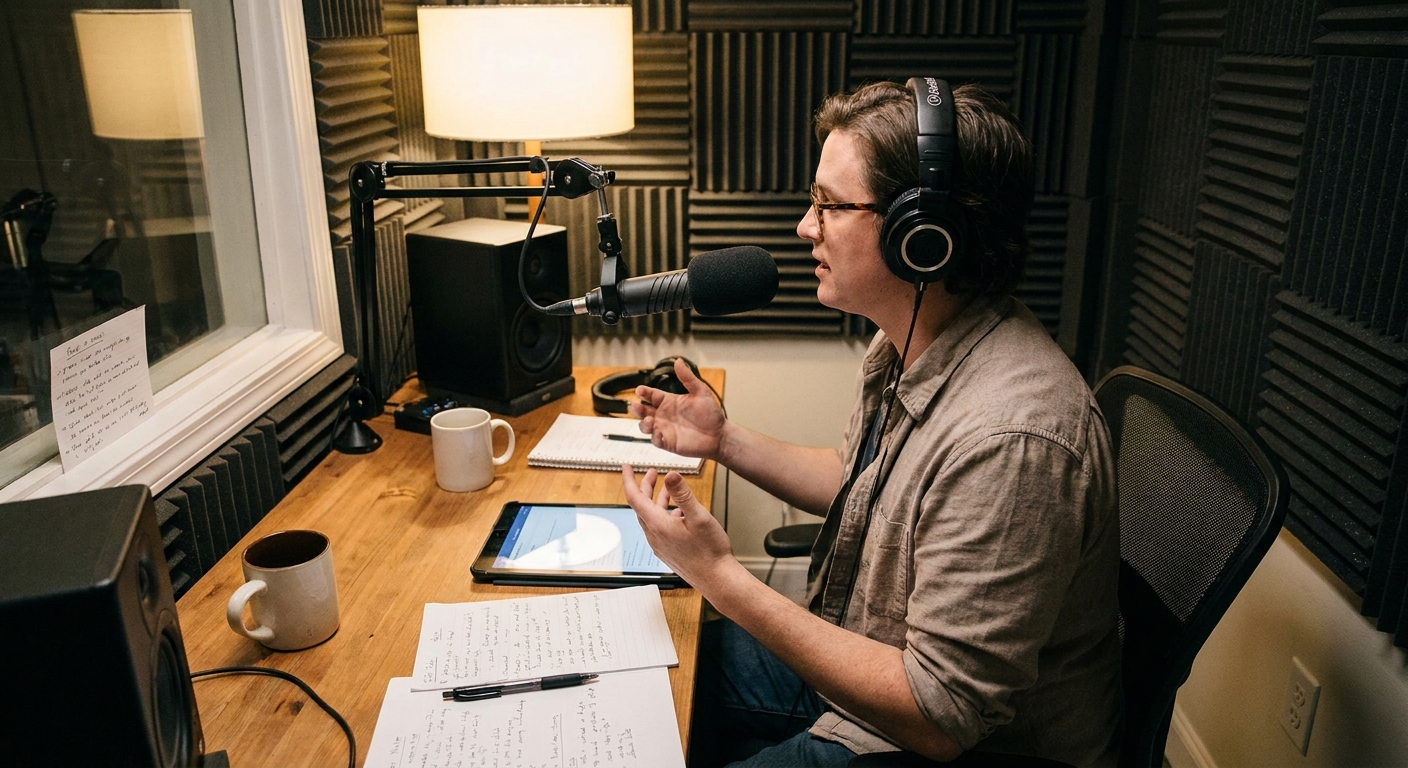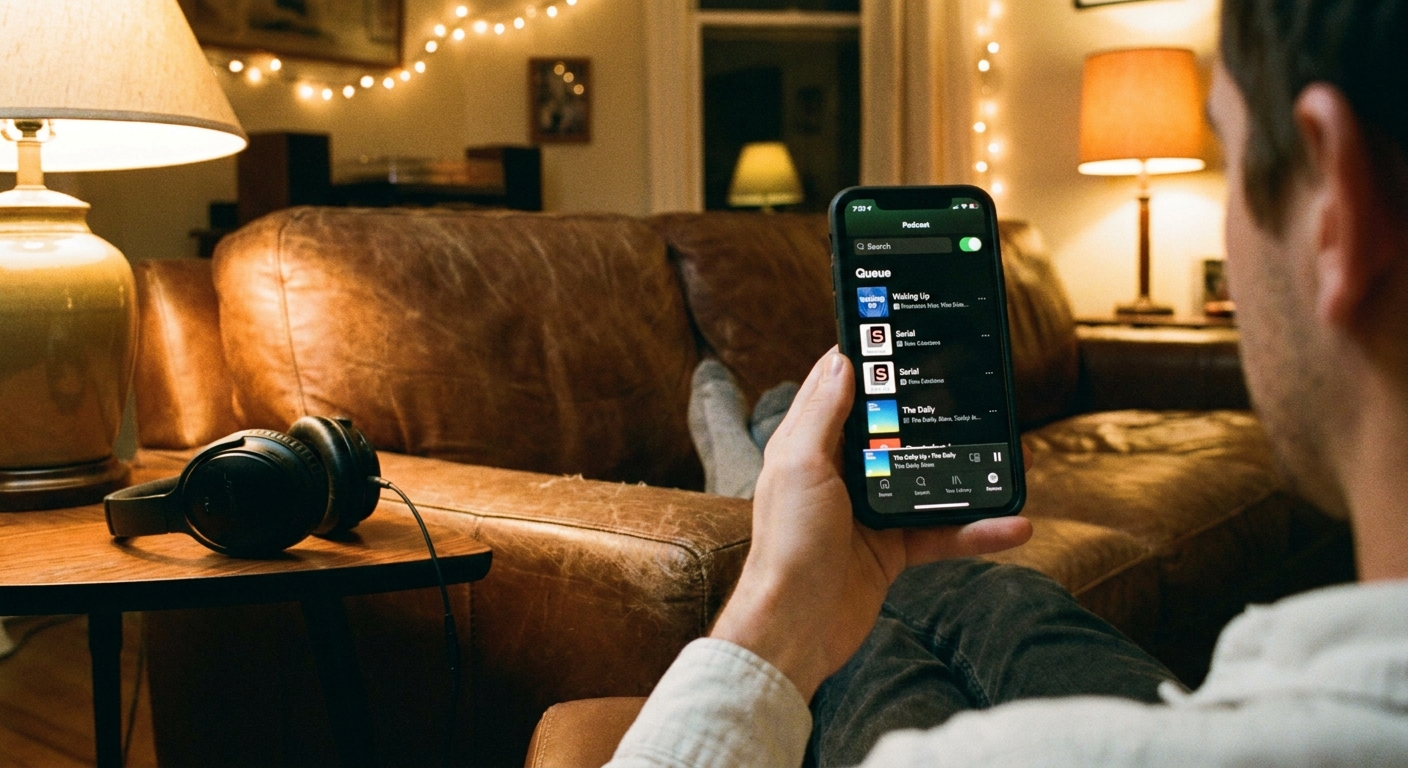
There is a specific moment I recognize in myself, and in friends who listen as much as I do: you press play on a new episode and realize your shoulders are already up by your ears. You're not curious, you're bracing. That's not you “getting soft.” That's your nervous system asking for a little cooperation.
True crime can be meaningful when it's handled with care. It can also quietly drain you when your listening habits start stacking trauma on top of trauma with no recovery time in between. If your feed is constant investigations, courtroom audio, and worst day of someone’s life storytelling, burnout isn't a moral failing. For a lot of listeners, it's a very understandable outcome.
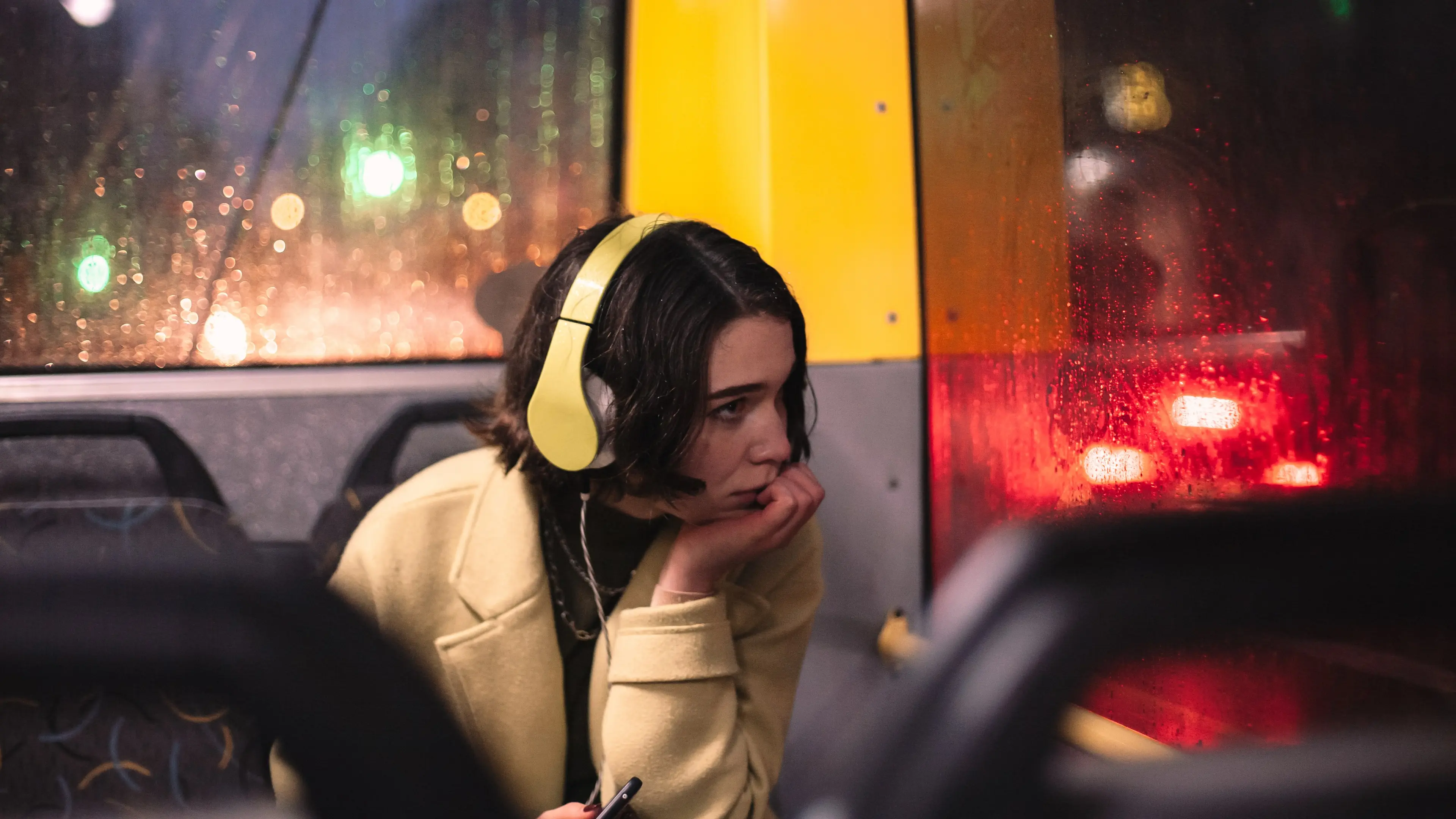
Below are practical, guilt-free ways to keep listening without feeling like you're carrying every case around in your body.
What burnout can look like
Burnout isn't always dramatic. Sometimes it's subtle, like your brain slowly dimming the lights so it can keep functioning.
- Anxiety spikes during or after episodes, especially at night or when you're alone
- Hypervigilance, like triple-checking locks or scanning strangers more than usual
- Emotional numbness, where stories that used to move you now feel like noise
- Intrusive images or “echoes” from graphic details
- Irritability and a shorter fuse, even when nothing's wrong
- Sleep disruption, including vivid dreams
- Doom-queueing (an autoplay spiral), where you keep hitting play even though you feel worse
If you're noticing any of the above, the goal isn't to quit forever. It's to build recovery into your consumption the same way athletes build recovery into training.
A quick note on language: people sometimes use “burnout” as a catch-all. Some of what you're feeling may also overlap with secondary traumatic stress or vicarious trauma, which can happen when you're repeatedly exposed to distressing details, even indirectly. You don't need the perfect label to take it seriously, though. If it’s affecting your sleep, mood, or sense of safety, it counts.
Start with one boundary
Most listeners don't need a grand “I'm done with the genre” declaration. You need one realistic line in the sand.
Try a time rule
- No true crime after 7 p.m. if it reliably hijacks your sleep
- Only one episode per day, even if you binge other genres
- True crime only on commutes, not in bed or during routines that make you feel isolated or keyed up
Try a content rule
If certain case types hit too close, it's okay to protect your peace.
- Pause episodes involving children or sexual violence
- Avoid torture-heavy or graphic forensic narration
- Skip shows that lean into mockery, jokes at victims’ expense, or “gotcha” cruelty
A boundary isn't censorship. It's selective listening, and selective listening is a skill.
Do a quick check-in
This is the simplest tool I know, and it can take ten seconds if you keep it simple. Ask yourself:
- Am I choosing this, or avoiding something?
- What emotion am I in right now? (stressed, lonely, restless, angry)
- Will this episode turn the volume up or down?
If you're already keyed up, true crime can function like tossing kindling on a flame. Save it for when you have more bandwidth, and pick something that calms or grounds you instead.
Palate cleansers
“Just listen to something lighter” is good advice, but vague. Here are palate cleansers that tend to reset the brain quickly.
Short comedy or comfort chat
Choose voices that feel safe and familiar, the audio equivalent of a blanket.
- Low-stakes comedy panels
- Pop culture recaps
- Friendship-style shows where nothing catastrophic happens
Nature, travel, or craft
These can be especially effective because they engage curiosity without threat.
- Backyard birding and nature soundscapes
- Food history
- Design, home projects, sewing, baking
Gentle story with resolution
If you crave structure, pick something that resolves tension without violence.
- Scam stories with minimal harm
- Heists and capers where nobody dies
- Sports stories, comeback arcs, or behind-the-scenes creative journeys

Change how you listen
Listening context matters. A brutal episode while you're washing dishes in a quiet house lands differently than that same episode while you're outside in daylight.
Pick safer settings
- Daytime listening rather than late-night
- Public or semi-public spaces if you're prone to fear spirals
- While moving your body, like walking, stretching, or cleaning with the windows open
Avoid pairing with vulnerable routines
If you have anxiety, try not to combine true crime with:
- Falling asleep
- Showering
- Being home alone late at night
- Long solo drives on empty roads
It's not that you can't handle it. It's that your brain files sensory context together. Protect the routines that are supposed to signal safety.
Curate your feed
One of the easiest burnout traps is the illusion of infinite backlog. Your app will happily serve you grim stories forever. Curation is how you take back the wheel.
Do a monthly sweep
- Drop shows that rely on shock or gore to hold attention
- Pause binge-heavy series until you know you're in a good headspace
- Keep a smaller list of trusted creators whose sourcing and tone feel ethical
Use playlists
- Create a “Light Reset” playlist for after intense episodes
- Create a “Daytime Only” playlist for heavier investigative work
- Create a “Comfort Re-listen” playlist of episodes you know aren't graphic
This is boring advice, and boring advice is usually the stuff that saves you.
Recovery after an episode
Think of this like washing your hands after handling something messy. You're not being dramatic. You're closing the loop.
A 5-minute reset
- Stand up and shake out your arms or take a short walk
- Do a grounding scan: name five things you can see, four you can feel, three you can hear (and if you want the full version, add two you can smell and one you can taste)
- Drink water, eat something simple, and change rooms if you can
A closure note
Some stories end without resolution, which can leave your mind chewing on them. Try a sentence like:
“I can care about what happened without carrying it all day. Right now I'm returning to my life.”
It sounds cheesy. For a lot of people, it can help.
When it feels compulsive
There's a difference between fascination and compulsion. If you find yourself unable to stop even when you feel physically unwell, consider one of these gentle interventions:
- Delay, don't deny: set a 30-minute timer and listen later if you still want to
- Swap the ritual: keep your headphones, but change the genre so your body still gets the comfort cue
- Add friction: remove autoplay, delete the app shortcut, or require yourself to choose episodes intentionally
This is also a good moment to ask what the listening is doing for you. Is it company? A sense of control? Adrenaline? If you can name the need, you can meet it in ways that don't leave you depleted.
If you live with OCD or health anxiety, or you notice reassurance-seeking loops, true crime can sometimes act like gasoline. It's not a character flaw. It's a pattern. Consider extra friction and clearer limits, and talk with a clinician if you want help untangling it.
Ethics can help
This isn't about being perfect. It's about noticing that the shows we consume shape our internal weather.
If you're feeling burnt out, it can help to lean toward podcasts that:
- Center victims as people, not plot devices
- Avoid unnecessary graphic detail
- Credit reporting, documents, and community sources clearly
- Correct errors and update stories responsibly
- Don't treat suspects, families, or marginalized communities as punchlines
For many listeners, ethical storytelling also feels less draining, partly because it isn't built on constant escalation for shock value.

When to take a break
Sometimes the answer isn't a palate cleanser. It's a real pause.
Consider stepping away for a week or two if:
- You're having persistent nightmares or intrusive thoughts
- You feel unsafe in ordinary situations
- Your mood is noticeably lower after listening, nearly every time
- You're consuming more graphic content to “feel something”
If you have a history of trauma, certain case details can be activating in ways that deserve support, not grit. If your symptoms are intense or not improving, talking with a mental health professional can help. This is especially true if true crime has become your main coping mechanism for stress or loneliness.
If you're activated right now
- Pause the audio and look around the room. Name where you are and what day it is.
- Put both feet on the floor and take five slow breaths, longer on the exhale.
- Text or call someone safe if being alone makes it worse.
- If you feel at risk of harming yourself or you can't calm down, seek urgent help in your area.
A one-week reset
If you want something you can start today, here's a simple one-week reset that doesn't require abandoning your feed.
- Days 1 to 2: No true crime after 7 p.m. Replace with comfort listening.
- Days 3 to 4: One episode max per day. No graphic case types.
- Day 5: Full off day. Music, sports, comedy, or silence.
- Days 6 to 7: Return intentionally. Choose one ethically solid episode and do a 5-minute recovery ritual after.
If you feel noticeably better by Day 3, that's your body telling you something useful.
FAQ
Is it normal to feel anxious after true crime podcasts?
Yes. True crime often includes threat cues, vivid detail, and injustice. Anxiety can be a natural response, especially if you listen at night or during vulnerable routines. If it's persistent or disruptive, it's a sign to adjust your habits or take a break.
Why do I keep listening even when it makes me feel bad?
Because storytelling is sticky, and because anxiety can create a loop where you seek more information to feel in control. Autoplay and endless backlogs make this easier. Adding boundaries and friction helps.
Will taking breaks make me less interested in true crime?
In my experience, breaks usually restore curiosity. Burnout is what flattens interest and turns listening into a grim chore.
What if I feel guilty stepping away from victims’ stories?
Caring isn't measured in hours listened. If a show asks you to sacrifice your mental health to prove empathy, something's off. You can support advocacy, share accurate resources, or donate thoughtfully without marinating in trauma every day.
One last thing
If true crime has been your comfort genre, burnout can feel strangely like losing a familiar routine. You're not losing it. You're recalibrating it. The point is to keep your curiosity intact while letting your nervous system exhale.
And if you need permission to hit pause, here it is: you can come back when your body stops bracing at the sound of the theme music.